
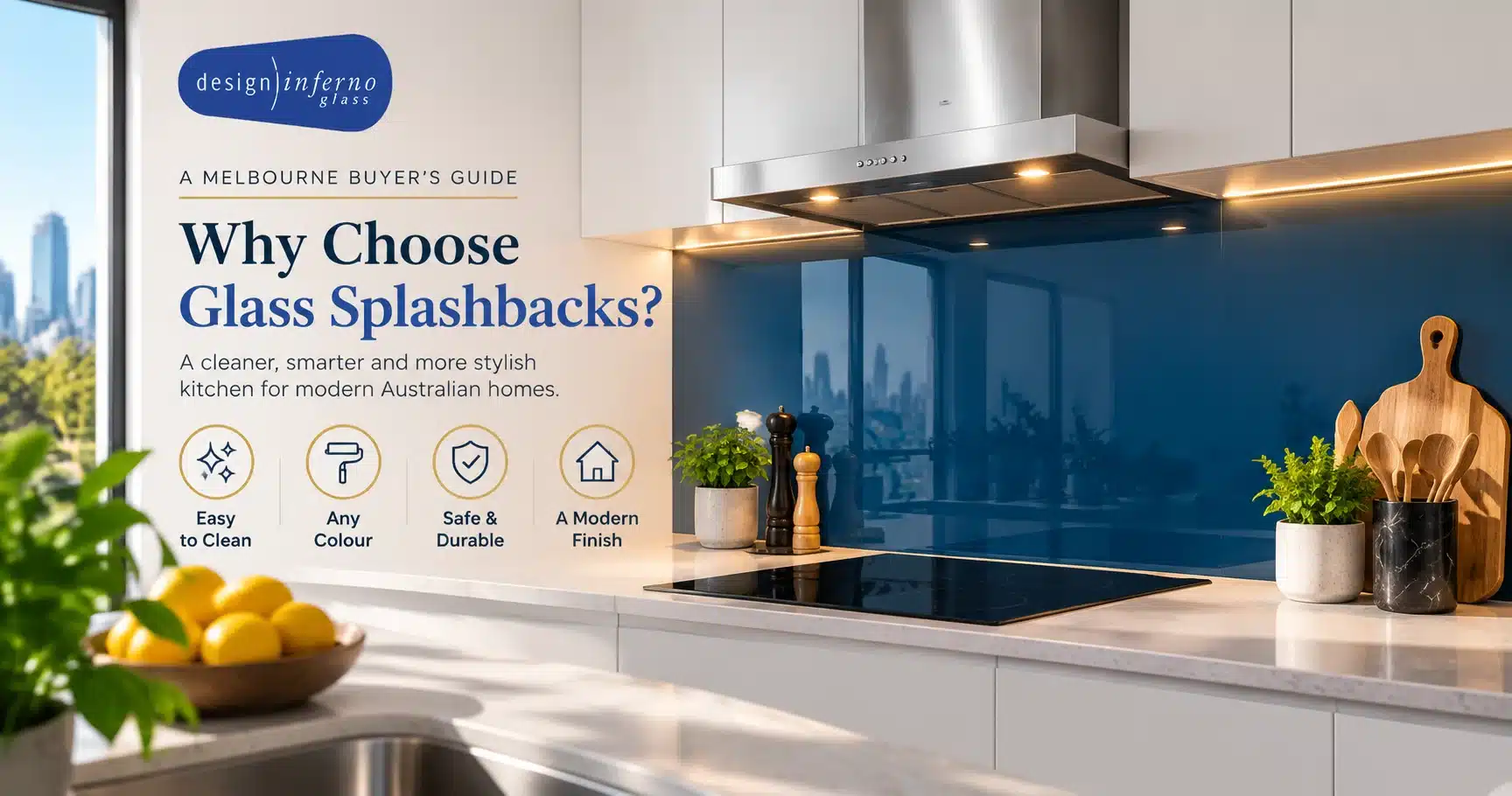
A glass splashback is a panel of toughened safety glass fixed to the wall behind a kitchen bench, cooktop or sink. Homeowners choose it because the surface is non-porous and grout-free, so it wipes clean and never needs resealing. It is back-painted to order in any colour, made to AS/NZS 2208 and installed under AS 1288:2021.
Key takeaways
- Toughened safety glass, usually 6mm, made to AS/NZS 2208 and installed under AS 1288:2021.
- No grout, so there is nothing to scrub, reseal or discolour over time.
- Back-painted in any colour, including a match to your painter’s Dulux or Taubmans code.
- Suitable behind gas, electric and induction cooktops, subject to clearances set by the appliance.
- Low-iron glass is worth the upgrade on white and pale colours, and unnecessary on dark ones.
- Design Inferno lists splashbacks from $850, with a check measure after the benchtop goes in and two to four weeks to manufacture.
What is a glass splashback?
A glass splashback is a single panel of toughened safety glass that protects the wall behind a bench, cooktop or sink from heat, moisture, oil and cooking splatter. Most splashbacks are 6mm toughened glass. The colour sits on the back of the panel, applied as a baked or cured paint, so the finish is protected by the glass itself.
You may see several names for the same product. Back-painted glass, coloured glass splashback and glass kitchen panel all describe a painted glass panel. Printed glass, mirror and textured slump glass are variations on the same idea, using a different surface treatment instead of a solid colour.
💡 GOOD TO KNOW Toughened glass, also called tempered glass, is heat-treated to make it stronger. If it breaks, it crumbles into small blunt pieces rather than sharp shards. Toughening happens at the factory, so a finished panel cannot be cut, drilled or trimmed on site.
Why choose a glass splashback over tiles?
Glass has no grout, so it cannot stain, harbour mould or need resealing. That is the maintenance that makes tiled splashbacks age badly. Grout lines absorb moisture, collect cooking oil and discolour over time. A glass splashback is one continuous non-porous surface, so there is nothing for grease or mould to sit in. Tiles still suit kitchens wanting a patterned or handmade look.
Where glass wins
- No grout to scrub or reseal
- Seamless across the whole panel
- Any colour, matched before manufacture
- Reflects light into small kitchens
- Wipes clean in seconds
Where tiles still make sense
- Patterned, handmade or textured looks
- Small repairs replace one tile, not a panel
- Can be cut and adjusted on site
- Wider budget range at entry level
- No lead time for stock tiles
Glass compared with other splashback materials
| Material | Surface | Cleaning | Colour options | Main limitation |
|---|---|---|---|---|
| Toughened glass | Non-porous, grout-free, seamless | Soft cloth, non-abrasive cleaner | Custom colours, prints, mirror, textured | Made to measure, cannot be altered on site |
| Ceramic or subway tiles | Tile face with porous grout joints | Grout needs scrubbing and resealing | Very wide range of tiles and patterns | Grout discolours and needs maintenance |
| Stone or porcelain slab | Non-porous to semi-porous | Wipe clean; some stone needs sealing | Limited to available slab patterns | Heavy, and colour depends on the slab |
| Acrylic | Non-porous plastic sheet | Wipe clean; scratches more easily | Wide colour range | Not suitable directly behind a gas cooktop |
| Stainless steel | Non-porous metal | Wipe clean; shows fingerprints | Metal finish only | Scratches and marks show readily |
Glass also has a practical advantage during a renovation. Because the panel is measured after the benchtop is in, the splashback follows the real wall and bench line rather than an old drawing.
Are glass splashbacks safe and heat resistant behind a cooktop?
Yes. Toughened safety glass is used behind gas, electric and induction cooktops, provided the appliance’s clearance requirements are met. Toughened glass handles the heat of normal cooking and breaks safely if damaged. The deciding factor is not the glass. It is the clearance between the appliance and the surface behind it, set by the cooktop manufacturer and the gas installation standard.
Which standards apply
Safety glazing used in Australian buildings is manufactured to AS/NZS 2208, the standard for safety glazing materials in buildings. Glass selection and installation is covered by AS 1288:2021, which supersedes the 2006 edition and is a primary reference for the National Construction Code. Ask your supplier to confirm the glass supplied for your kitchen is toughened safety glass.
Gas cooktops and clearances
Gas appliance installation in Australia is governed by AS/NZS 5601.1, which sets clearances between gas appliances and adjacent surfaces. Clearances vary by appliance, so the cooktop’s own installation instructions matter. Design Inferno states that its splashbacks are safe behind all cooktops, including gas, and comply with Australian safety standards.
⚠ CHECK BEFORE YOU ORDER Confirm the required clearance for your specific cooktop with your installer before the glass is manufactured, because a cutout or panel height may need to change. This section is general guidance. A licensed gasfitter should confirm compliance for your installation.
Can glass splashbacks be made in any colour?
Yes. Glass splashbacks are back-painted, so the colour can be matched to any paint, cabinetry or stone reference before manufacture.
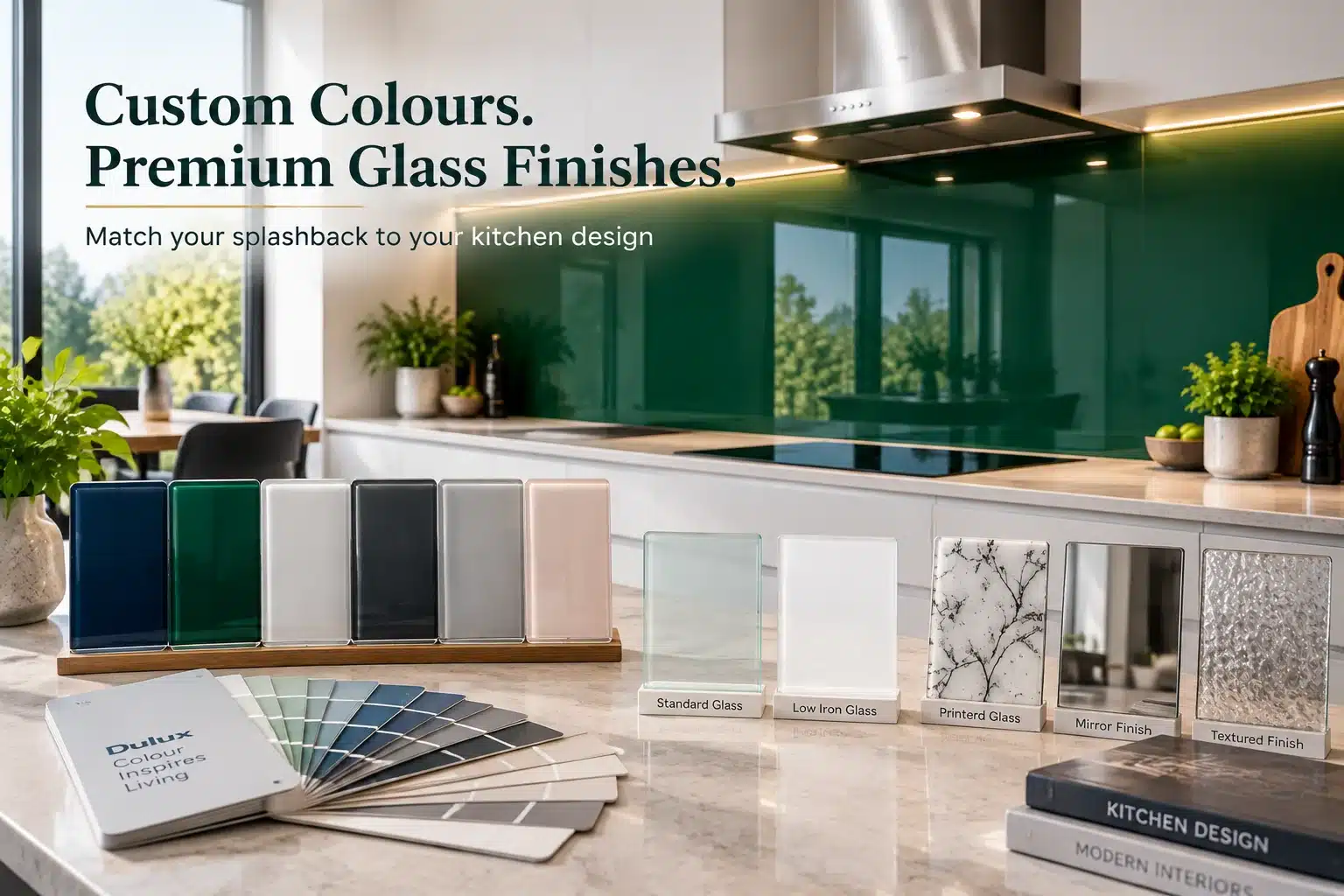
Design Inferno manufactures splashbacks in any colour and can match a Dulux or Taubmans code from your painter. Colour is locked in before manufacture, so samples matter more with glass than with tiles.
Preview shades using the online glass colour simulator, or view real finishes at the Keilor Park showroom.
What is low-iron glass and do I need it?
Standard float glass carries a faint green tint from the iron in the glass. On dark colours, you will not notice it. On whites, pale greys and soft pastels it can shift the colour slightly. Low-iron glass, sold under names such as Starphire and Optiwhite, removes most of that tint so pale colours read true.
💡 TIP Choose low-iron when the splashback is white or very light, and ask to compare a low-iron sample beside a standard one before deciding. On a charcoal or deep colour, standard glass is usually indistinguishable.
Printed, mirror and textured finishes
Not every splashback is a solid colour. Digitally printed glass carries an image or pattern. A toughened mirror splashback reflects the room and suits narrow galley kitchens. Textured slump glass adds a moulded surface with depth and shadow, which works well on a bar or feature wall. Design Inferno lists digitally printed, textured painted, toughened mirror and hand-silvered options.
How do you clean a glass splashback?
Wipe it with a soft cloth and a non-abrasive cleaner, then dry it. There is no grout to scrub and nothing to reseal.
The surface is non-porous, so oil and food sit on top instead of soaking in. Dry the glass after wiping to avoid streaks. For baked-on splatter, let a damp cloth sit on the mark for a minute first.
❌ AVOID THESE Abrasive creams, scourers and steel wool, which can scratch the surface Harsh solvents near the silicone joins Scraping dried food with a metal blade
That short routine is the main reason people replace tiles with glass. The maintenance is a wipe, not a project.
How much do glass splashbacks cost in Melbourne?
Design Inferno lists glass splashbacks from $850. Price is quoted per job, not per square metre, because size, glass type and cutouts change the total.
A quote is based on measurements. Confirm current pricing when you enquire, because rates change. The drivers below are what move the number.
| Cost driver | What moves the price |
|---|---|
| Total square metreage | Larger runs and full-height panels use more glass |
| Glass type | Low-iron, mirror, printed and textured cost more than standard back-painted |
| Cutouts | Each power point, tap, rangehood or shelf cutout adds fabrication work |
| Colour and finish | Custom colour matching and specialty finishes add cost |
| Site access and complexity | Stairs, tight access and awkward returns add installation time |
| Removal work | Stripping old tiles or an existing splashback is extra |
💡 COMPARING QUOTES Ask each supplier to list glass type, thickness, number of cutouts and installation separately. A single lump sum makes two quotes look similar when the specification is not.
How glass splashbacks are measured and installed
A glazier checks measurements on site after the benchtop is installed, then the panel is manufactured to those exact measurements and fixed with neutral-cure silicone.
Nothing is cut or adjusted on site, because toughened glass cannot be altered once it is made. The sequence runs as follows.
- Enquiry and quote. You supply rough sizes, photos or plans. Design Inferno provides a free quote within one to two business days.
- Colour and finish selection. Choose a colour using the simulator, a sample or a showroom visit, and confirm glass type.
- On-site check and measure. A glazier measures after the benchtop is in and the walls are finished, capturing cutout positions. Awkward returns or angled walls may also be templated, which means taking a physical pattern of the shape.
- Manufacture. The glass is cut, cutouts are made, the panel is toughened, then coloured and finished. Design Inferno quotes a two- to four-week lead time from design approval.
- Installation. Panels are fixed to a flat, dry, prepared wall with neutral-cure silicone, then joins are sealed, and the glass is cleaned.
- Curing. Silicone is left to cure before the splashback is used heavily.
⚠ ORGANISE THESE EARLY Moving a power point is electrical work and needs a licensed electrician, so finalise positions before the check measure. Wall preparation matters, because a bowed or unsealed wall will show through a glossy panel.
Where glass splashbacks work beyond the kitchen
Glass suits any wall that gets wet or dirty: bathrooms, laundries, butler’s pantries, bars and commercial fit-outs.
The same manufacturing process applies in each room. Only the size, colour and cutouts change.
| Room | Typical use | Why glass suits it |
|---|---|---|
| Bathroom | Behind a vanity or basin | Non-porous and unaffected by steam; pairs with frameless shower screens |
| Laundry | Behind a trough or bench | Handles splashing and detergent without staining |
| Butler’s pantry or bar | Feature wall behind the bench | A feature colour or textured finish works well in a small space |
| Commercial fit-out | Cafés, salons and offices | Wipe-clean surface with no grout to fail an inspection |
Bathroom projects often pair a splashback with frameless shower screens, manufactured from the same toughened glass in the same job.
Glass splashbacks across Melbourne
Design Inferno designs, manufactures, supplies and installs custom glass splashbacks across Melbourne from its Keilor Park factory and showroom.
The factory and showroom are at 48 Logistics Street, Keilor Park. Suburbs served include Essendon, Brunswick, Coburg, Moonee Ponds, Airport West, Footscray, Point Cook, Hawthorn and Caroline Springs.
Completed work is shown in the project gallery, which is a useful way to see how colours and finishes look once installed. Because manufacturing, measurement and installation are handled by one business, the colour you approve is the colour that is made, and the measurements taken on site are the measurements the panel is cut to. Design Inferno has more than 15 years of industry experience across residential and commercial glass projects, and its full range of custom glass splashbacks is shown on the product page.
The next step
Glass splashbacks suit homeowners who want a seamless, grout-free surface in a colour chosen to match the rest of the kitchen. The decisions that matter most are glass type, colour and cutout positions, and all three are settled before manufacture begins.
Measurements and pricing start with a site visit. Request a free quote to book a check measure with the Keilor Park team.
Frequently asked questions
Sometimes, but only when the tiled surface is flat, sound and dry. Uneven tiles or raised edges will telegraph through a glossy panel and can prevent the glass from sitting flush. A measure appointment will confirm whether the wall needs the tiles removed and the surface made good first.
Design Inferno quotes two to four weeks from design approval. The clock starts after the final check measure and colour approval, not at the first enquiry, because the panel is manufactured to your measurements.
Toughened glass resists everyday scratching and does not absorb moisture or stain. The back-applied colour is protected by the glass, so it will not fade with cleaning. Glass can still be chipped or broken by a hard impact, and a damaged panel is replaced rather than repaired.
Yes. Cutouts for power points, tapware, rangehoods and shelving are fabricated before the glass is toughened. Positions are recorded at the check measure, so power point locations must be finalised before then. Moving a power point afterwards requires a licensed electrician and a new panel.
No. There is no grout to reseal. Silicone joins at edges and corners may be refreshed after many years if they discolour, which is a minor job compared with regrouting tiles.
Colours and finishes can be viewed at the Design Inferno showroom at 48 Logistics Street, Keilor Park. The online glass colour simulator is a useful first step, though screens vary, so checking a physical sample before approving a colour is worthwhile.
