
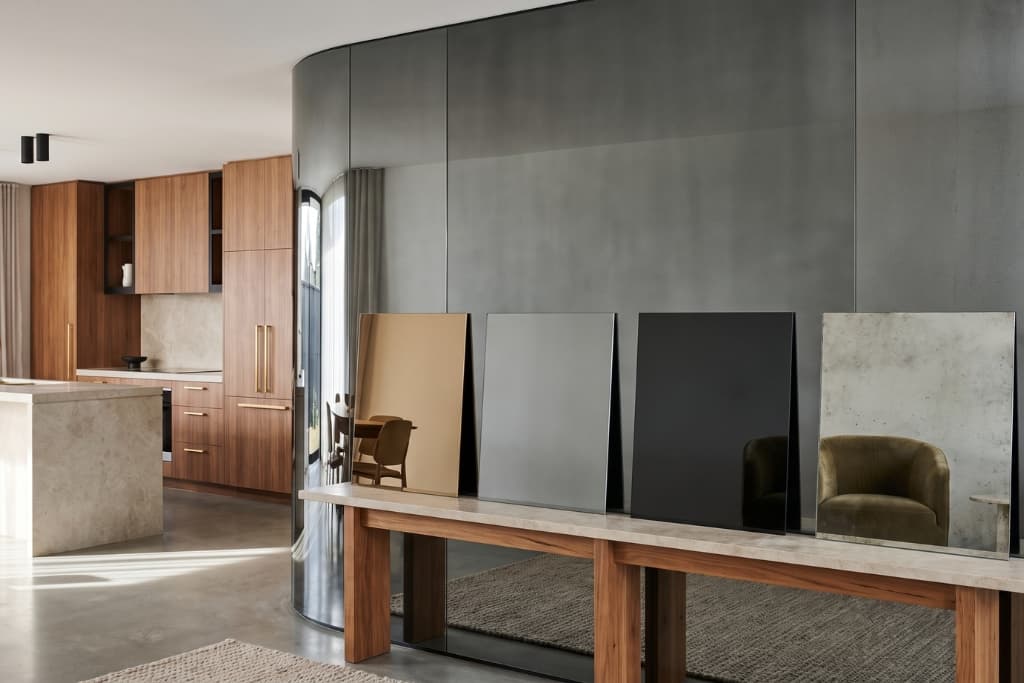
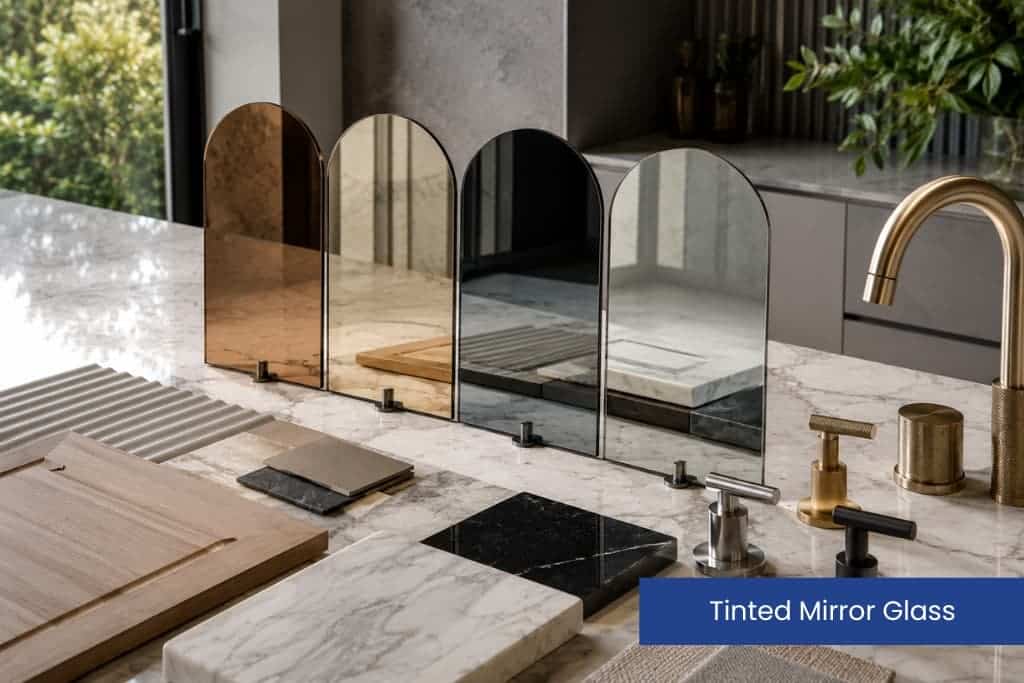
The right shade of coloured mirror glass depends on the look you want, the room’s natural light and your existing finishes (tapware, cabinetry, benchtop). Bronze adds warmth, smoked grey is the easy neutral, black makes a feature, and antique adds character.
At a glance:
- Best for warmth: Bronze mirror — warm, golden, vintage tone.
- Best all-rounder: Smoked grey (gunmetal) — neutral, low-glare, modern.
- Best for drama: Black mirror — broad, high-contrast accent.
- Best for character: Antique (distressed) mirror — aged, mottled finish.
- Best for splashbacks: 6mm Grade A toughened mirror (grey or bronze).
- Best for small/low-light rooms: Light grey or silver mirror.
Choosing the right shade of coloured mirror glass comes down to three things: the look you are after, how much natural light the room receives, and the tones of your existing tapware, cabinetry and benchtops. This guide explains what tinted mirror glass is, the shades available in Australia, and how to match a shade to your kitchen, bathroom, wardrobe or feature wall.
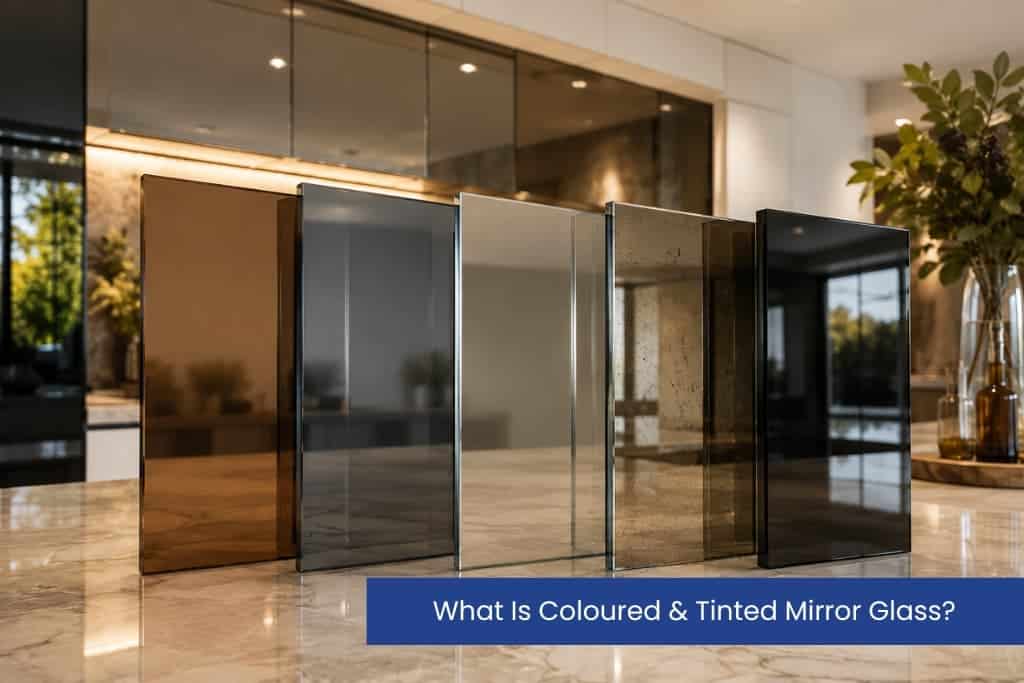
What Is Coloured & Tinted Mirror Glass?
Coloured and tinted mirror glass is a decorative architectural glass that reflects like an ordinary mirror but in a colour rather than plain silver. It is made by silvering float glass, applying a reflective backing using glass tinted bronze, grey, black or another shade, so the finished panel shows a coloured reflection. The result is a mirror that doubles as a design feature on splashbacks, robe doors, vanities and feature walls.
It is worth clearing up one common mix-up early. Tinted mirror glass is coloured during manufacturing; mirror window film is a separate product applied to existing glass. For a permanent, heat-tolerant, scratch-resistant finish in a kitchen or bathroom, tinted mirror glass is the right choice. Quality panels also use copper-free (eco) silver backing, which improves corrosion resistance in steamy bathrooms and laundries.
Coloured mirror glass used in Australian homes is governed by Australian Standards, in particular AS 1288 (selection and installation of glass in buildings) and AS/NZS 2208 (safety glazing materials). These matter most where a mirror could be broken or contacted by people, such as a splashback or door, where toughened safety glass is required.
What Shades Does Tinted Mirror Glass Come In?
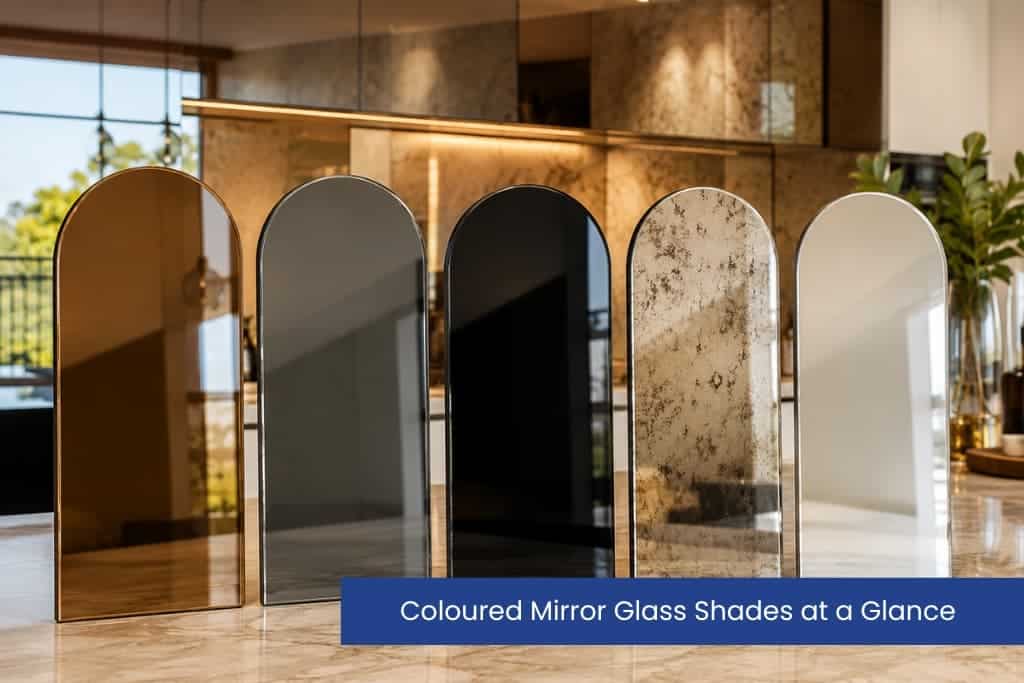
The most common shades in Australia are bronze, smoked grey (gunmetal/ash), black, antique (distressed) and standard silver. Each reflects light differently and suits a different style. Here is how each shade behaves.
Bronze Mirror Glass
Bronze mirror glass adds a warm, golden, slightly vintage tone. It softens and warms reflected light, which makes it flattering in living areas, kitchens and period-style homes. Bronze pairs beautifully with timber cabinetry, brass or gold tapware and warm stone benchtops.
Smoked Grey (Gunmetal) Mirror Glass
Smoked grey mirror glass gives a neutral, cool, contemporary look and reduces glare compared with a clear silver mirror, making it easy to live with in bright rooms. Grey is the most versatile shade for modern Australian kitchens, bathrooms and wardrobe doors because it works with chrome, matte black and grey-toned stone.
Black Mirror Glass
Black mirror glass creates a dramatic, high-contrast feature with the deepest, darkest reflection. It is best used as an accent, a bar, a feature wall or a powder room rather than across a whole room. Because it absorbs light, a black mirror can make a small or low-light room feel darker, so reserve it for spaces with good natural light.
Antique (Distressed) Mirror Glass
Antique mirror glass has a distressed, aged finish with mottled patches that mimic old, weathered mirror. It adds character to feature walls, bar backs and joinery inlays in heritage or French-provincial interiors. Because the surface is intentionally patchy, it is not ideal for a clear, functional reflection, such as a vanity.
Coloured Mirror Glass Shades at a Glance (Top Picks)
The table below summarises the five mainstream shades, how each feels, and where it works best, as a quick reference before you compare the three best-sellers in detail.
| Shade | Feel | Best for | Why choose it |
| Bronze | Warm / vintage | Kitchens, living, period homes | Warms reflected light; pairs with timber, brass and warm stone. |
| Smoked grey | Neutral/cool | Bathrooms, robes, modern kitchens | Most versatile all-rounder; low glare; suits chrome and matte black. |
| Black | Dramatic/bold | Feature walls, bars, powder rooms | Deepest reflection for accent zones; best with good natural light. |
| Antique | Aged / character | Feature walls, heritage interiors | Distressed, mottled finish; not for functional reflection. |
| Silver | Bright/true | Vanities, dressing, and small rooms | Truest, brightest reflection; most economical option. |
Bronze vs Grey vs Black Mirror: What’s the Difference?
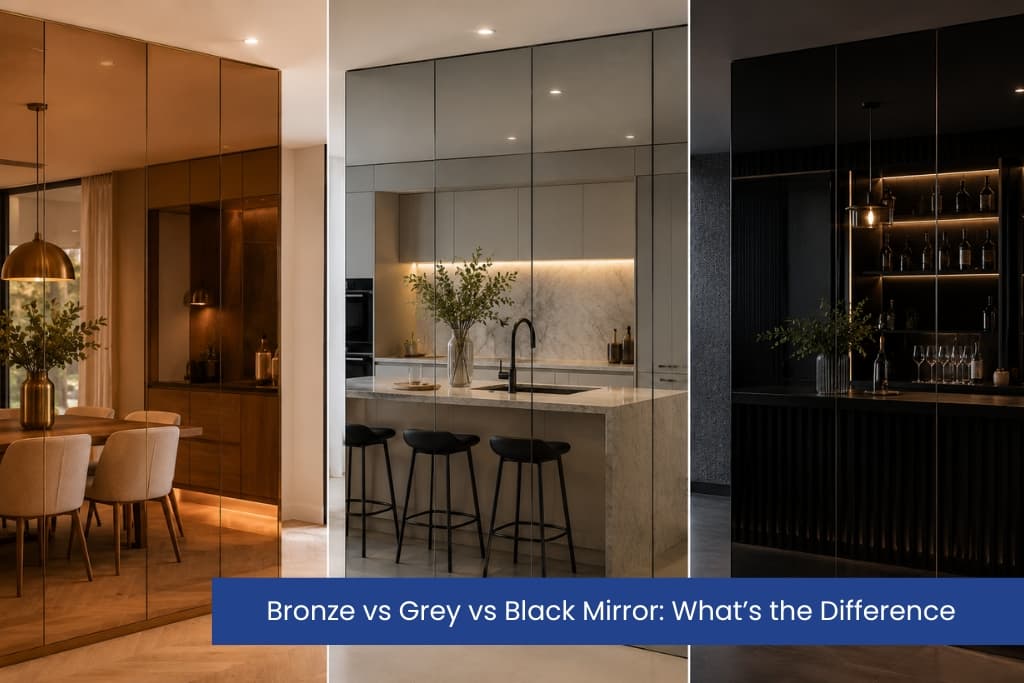
The quickest way to choose is to compare the three best-selling shades side by side. Bronze is the warmest, grey is the most neutral and forgiving, and black is the boldest.
| Feature | Bronze mirror | Smoked grey mirror | Black mirror |
| Overall feel | Warm, vintage, golden | Neutral, cool, contemporary | Dramatic, bold, high-contrast |
| Reflected light | Softens and warms light | Soft, low-glare reflection | Darkest, deepest reflection |
| Best rooms | Warm kitchens, period homes | Modern kitchens, baths, and robes | Accent zones, bars, features |
| Pairs with | Timber, brass, warm stone | Matte black, chrome, grey stone | Gold, matte black, dark joinery |
| Small / low-light | Good | Very good | Use with care — can darken |
How to Choose the Right Mirror Shade for Your Space
To choose the right shade, match the mirror to your room’s size and light first, then to your fixtures and finishes. Get those two right, and the colour decision becomes straightforward. To preview how a tint looks before you commit, try the Design Inferno colour simulator.
Match the Shade to Room Size and Light
Lighter tints suit small or low-light rooms because they reflect more light and help a space feel larger and brighter. Smoked grey and silver are the safest choices for compact bathrooms,en-suites,s and galley kitchens. Reserve black mirror for larger rooms or deliberate accent zones, since it absorbs light. Bronze sits between warm and brightening, but with more character than plain silver.
Match the Shade to Your Fixtures and Finishes
Your mirror shade should complement your tapware, cabinetry and benchtop tones. As a rule of thumb, bronze pairs with warm timber and brass; grey pairs with chrome, matte black and cool stone; black pairs with gold, matte black and dark joinery. Bring a benchtop sample and a tapware finish when viewing mirror samples, and always check the colour in the actual room, as tints look different under warm versus cool lighting.
Where Can You Use Tinted Mirror Glass?
Tinted mirror glass is used for splashbacks, sliding wardrobe (robe) doors, feature walls, vanities, gym and dance mirrors, ceiling panels and joinery inlays. The best shade depends on the application:
- Kitchen and bathroom splashbacks — grey and bronze are most popular; they brighten the room. See mirror glass splashbacks (they must be toughened, as below).
- Sliding wardrobe and robe doors — smoked grey is the go-to for a soft, full-length reflection; view mirrored wardrobe doors.
- Feature walls and bar backs — black and antique mirror create the most impact, alongside decorative feature glass.
- Vanity and dressing mirrors — silver or light grey give the truest, most usable reflection; avoid antique here.
- Ceilings, furniture inlays and joinery — any shade works- match the surrounding cabinetry.
Does Coloured Mirror Glass Need to Be Toughened?
Yes, where coloured mirror glass is used as a splashback or in a door, it must be toughened (Grade A) safety glass to comply with AS 1288, AS/NZS 2208 and the National Construction Code. A mirror splashback must use toughened safety glass because it sits behind a cooktop exposed to heat, and because safety glazing is required in these locations to reduce the risk of cutting injuries if broken. The same applies to frameless and panel glass in wet areas such as glass shower screens.
One technical point: not every mirror can simply be toughened. Standard silvered mirror can be damaged by the heat of toughening, so splashback mirror is made using special heat-stable coatings designed to be thermally toughened to Grade A safety. When ordering a tinted mirror splashback, confirm it is supplied as 6mm Grade A toughened safety glass. Away from heat and impact zones, a feature wall may not require toughening, but a glazier can advise based on the location and AS 1288.
Can Tinted Mirror Glass Be Cut to Size?
Yes,s tinted mirror glass can be cut to size and custom-shaped, including holes and cut-outs for power points, tapware and fittings. Most suppliers offer custom panels with a choice of edgework, polished, bevelled, mitred or radius corners. Cut-to-size custom orders typically take a few days, depending on colour, thickness and edge finish.
Choosing the right thickness matters. The common options:
| Thickness | Typical use | Notes |
| 4mm | Small decorative panels, joinery inlays | Light-duty, framed or backed panels. |
| 5mm | Wardrobe doors, larger wall mirrors | Good balance of weight and rigidity. |
| 6mm | Splashbacks, full-height feature panels | Standard for Grade A toughened splashbacks. |
Measuring and Ordering a Custom Mirror
For small decorative panels you can measure and order yourself, but for splashbacks and full-height doors, a professional template and measure is strongly recommended. A glazier will template the area, allow for power points and uneven walls, recommend the right thickness, and handle cut-outs and installation with mirror adhesive, silicone or mechanical fixings. The best next step is to book a measure and quote so the panel is cut right the first time and avoids costly re-cuts.
How Much Does Coloured Mirror Glass Cost in Australia?
The price of coloured mirror glass in Australia varies by colour, thickness, toughening, edgework, panel size and installation. There is no single fixed rate. The main cost drivers are:
- Colour — standard silver is usually most economical; bronze, grey, black and antique tints cost more.
- Toughening — Grade A toughened safety glass (required for splashbacks and doors) adds to the price.
- Thickness — 6mm costs more than 4mm or 5mm.
- Edgework and cut-outs — bevelled or polished edges and holes for fittings add labour.
- Size and installation — larger panels and supply-and-install cost more than small DIY pieces.
For an accurate figure, get a quote based on your exact sizes, shade and finish. A supplier can price a like-for-like comparison across shades so you can see the difference before you commit.
How to Clean and Maintain Tinted Mirror Glass
Clean the tinted mirror with a soft cloth and a non-abrasive glass cleaner — avoid harsh, ammonia-heavy or abrasive products that can damage the surface or backing over time. The most important rule is to keep the edges dry, because moisture against an unsealed edge causes “black edge”, the dark corrosion creep seen on old bathroom mirrors. Wipe up splashes, ensure edges are sealed in wet areas, and choose copper-free silvering for bathrooms and laundries to maximise corrosion resistance.
Find the right coloured mirror glass for your home
View bronze, smoked grey, black and antique mirror samples in your own space and get a cut-to-size quote across a couple of shades before you decide. Splashback and door panels are supplied as 6mm Grade A toughened safety glass.
→ Request samples or book a measure & quote with Design Inferno today.
Frequently Asked Questions
A smoked grey or silver mirror is best for a small or low-light room because lighter tints reflect more light and help the space feel larger and brighter. Black mirror is best avoided in compact rooms as it absorbs light.
Smoked grey is currently the most popular all-round tint in Australian homes because it is neutral and suits modern kitchens, bathrooms and wardrobe doors. Bronze is a strong second for warmer, timber-and-brass interiors and period homes.
Tinted mirror glass is coloured during manufacturing and is a permanent, heat-tolerant glass product. Mirror film is a thin tint applied to existing glass. For splashbacks, robe doors and feature walls, tinted mirror glass is the durable, compliant option.
Yes. A mirror splashback must be Grade A toughened safety glass to comply with AS 1288 and AS/NZS 2208 and to withstand heat behind a cooktop. Confirm your panel is supplied as 6mm Grade A toughened safety glass.
Antique mirror glass is a mirror with a deliberately aged, mottled finish that mimics old, weathered glass. It suits feature walls and joinery in heritage interiors, but is not ideal where you need a clear, functional reflection.
Yes. Tinted mirror glass can be cut to size and custom-shaped with holes and cut-outs for fittings, and finished with polished or bevelled edges. Custom orders usually take a few days.
