
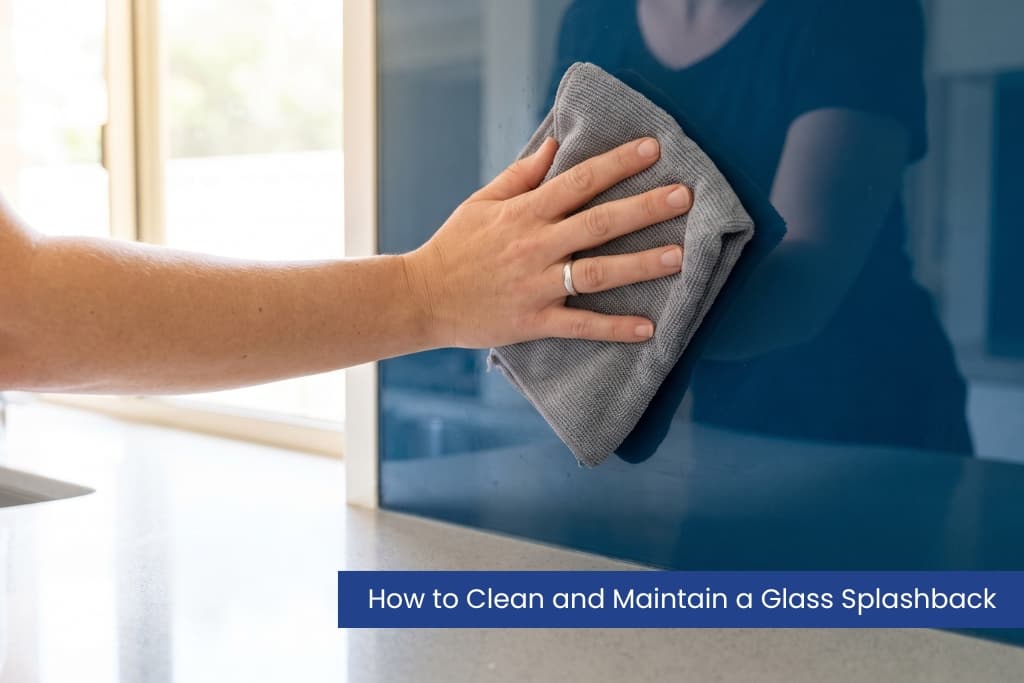
To clean a glass splashback, wipe it with warm soapy water and a soft microfibre cloth, then dry it with a clean cloth for a streak-free finish. Avoid scourers, abrasive powders and harsh chemicals, which can scratch the glass or damage the painted backing. A quick wipe after cooking stops grease building up, and a deeper monthly clean keeps the colour looking new for years.
Key takeaways
- Warm soapy water and a microfibre cloth handle almost every clean.
- Always dry the glass after cleaning to avoid streaks.
- Never use scourers, abrasive creams or strong ammonia products.
- Wipe splatter soon after cooking, once the glass has cooled.
- Glass has no grout lines, so it stays cleaner than tiles with less effort.
- Check the silicone seals around the edges about once a year.
Why are glass splashbacks so easy to clean?
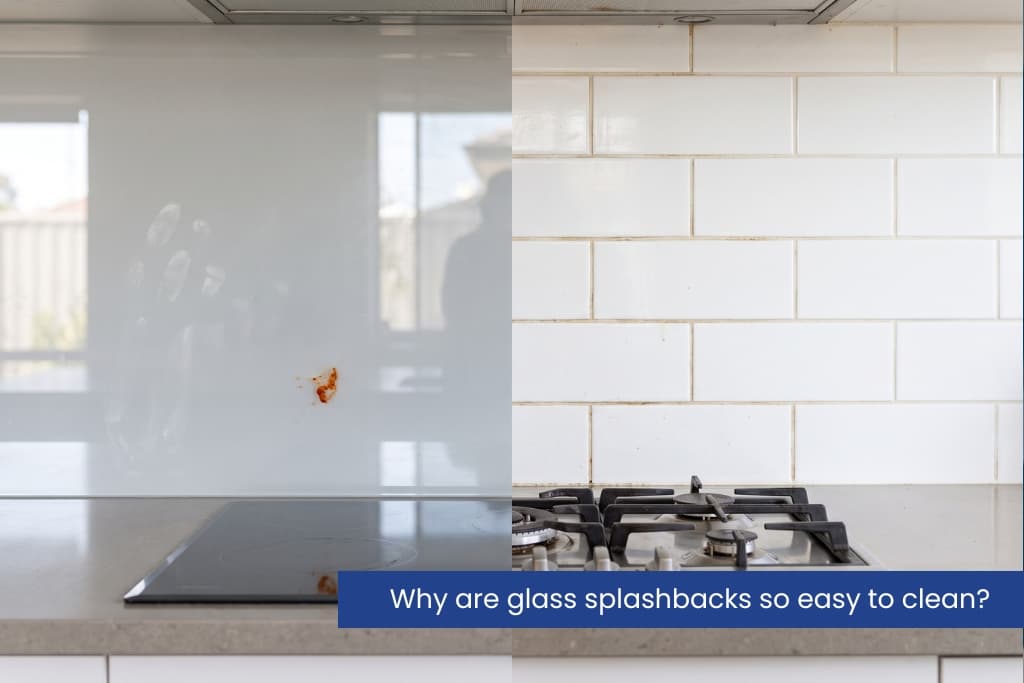
Glass splashbacks are easy to clean because the surface is non-porous and has no grout lines, so grease and food splatter sit on top instead of soaking in. One smooth panel wipes down in seconds.
Tiled splashbacks trap grease and moisture in the grout, which stains and can grow mould. A custom coloured glass splashback is a single sealed panel of toughened glass, so there is nowhere for grime to hide. Toughened glass is heat-treated to be far stronger than ordinary glass, which is why it handles the heat behind a cooktop and years of daily wiping without wearing. The colour is applied to the back of the glass, so cleaning the front never touches the paint.
| Glass splashback | Tiled splashback | |
|---|---|---|
| Grout lines | None | Many, and they stain |
| Everyday clean | Wipe with a damp cloth | Wipe plus scrub grout |
| Mould risk | Very low | Grout can grow mould |
| Deep clean needed | Monthly, five minutes | Grout scrubbing and periodic resealing |
| Surface | Non-porous, sealed | Porous grout absorbs grease |
What is the best way to clean a glass splashback?
The best way to clean a glass splashback is warm water with a few drops of dishwashing liquid, applied with a soft microfibre cloth and dried straight after. You rarely need anything stronger.
What you will need: two soft microfibre cloths, warm water, dishwashing liquid and, for deeper cleans, white vinegar in a spray bottle.
1. Wait until the glass is cool, especially behind the cooktop.
2. Mix warm water with a small squirt of dishwashing liquid.
3. Wipe the glass with a soft microfibre cloth in light circular motions, and let the solution sit for 30 to 60 seconds on greasy patches.
4. Rinse the cloth and go over the glass again with plain water.
5. Dry straight away with a clean, dry microfibre cloth. Air drying is what leaves streaks and water marks.
That is the whole job. For everyday marks, it takes two to three minutes. A standard glass cleaner from the supermarket is also fine for a quick spray and wipe, as long as it is not ammonia-heavy and you dry the glass afterwards.
How do you get a streak-free finish?
Streaks are almost always leftover cleaning residue, so the fix is less product, a proper rinse and a dry buff at the end. The glass itself does not streak; the film left on it does.
If plain soapy water still leaves a haze, mix one part white vinegar with four parts water in a spray bottle. Vinegar cuts through the fine film of grease that builds up near cooktops and leaves nothing behind. Spray lightly, wipe with a microfibre cloth in circular motions, then buff dry. A small squeegee also works well on large panels, pulling the water off in single passes the way you would on a glass shower screen. Clean out of direct sunlight where you can, because heat dries the solution before you can wipe it off, and that is what bakes streaks on. If streaks persist in a hard water area, mix your solution with distilled water instead of tap water; the minerals in tap water are a common cause of streaking.
Tip: Spray cleaner onto the cloth, not the glass. You use less product, nothing runs into the seals, and streaks are far less likely.
How do you remove stubborn grease and baked-on marks?
For stubborn grease, let a warm soapy solution sit on the mark for a few minutes, then lift it with a soft cloth; for baked-on spots, use a paste of bicarbonate of soda and water. Never scrape with metal or scour.
1. Soak the mark. Lay a cloth soaked in warm soapy water over the spot for five minutes to soften it.
2. Wipe in circles with a microfibre cloth. Most softened grease lifts straight off.
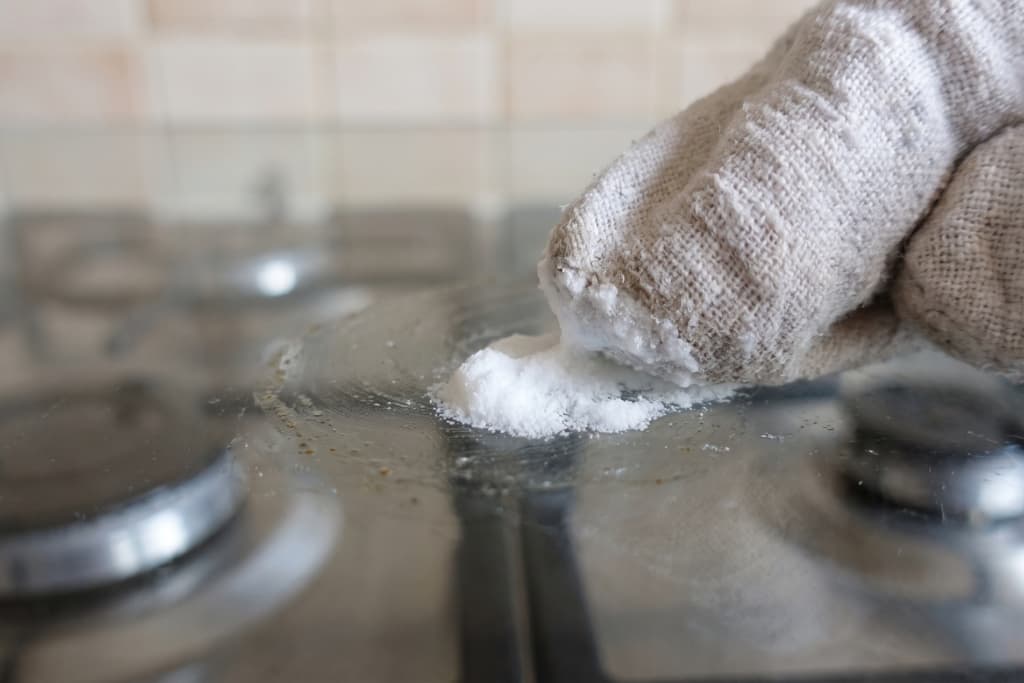
3. For anything left, mix bicarbonate of soda with a little water into a paste.
4. Rub the paste gently over the mark with a soft cloth, then rinse well.
5. Dry and buff the glass as normal.
Bicarb is very mildly abrasive, so use it gently and only on the marks, not the whole panel. For sticky residue such as tape marks or oil film, isopropyl alcohol mixed one-to-one with water also works well and evaporates without streaking. If a mark will not budge, a plastic (never metal) scraper held almost flat can help, but go slowly. The sooner you wipe splatter after cooking, the less often you will need any of this.
What should you never use on a glass splashback?
Never use abrasive scourers, harsh powders, metal scrapers or strong solvent cleaners on a glass splashback. They are the main causes of scratched glass and damaged edges.
| Safe to use | Avoid |
|---|---|
| Warm water + dishwashing liquid | Steel wool and scourer pads |
| Soft microfibre cloths | Abrasive cream cleansers and powders |
| White vinegar diluted in water | Metal scrapers and blades |
| Standard glass cleaner (low ammonia) | Strong ammonia or caustic cleaners |
| Bicarb paste (gently, on marks only) | Acid-based cleaners on edges and seals |
| Small squeegee | Steam cleaners aimed at edges or seals |
The glass itself is tough, but scourers leave fine scratches that dull the shine, and harsh solvents can attack the silicone seal around the edges. Keep strong chemicals and steam away from the perimeter of the panel, where the seal and the painted backing are exposed.
How often should you clean and check your splashback?
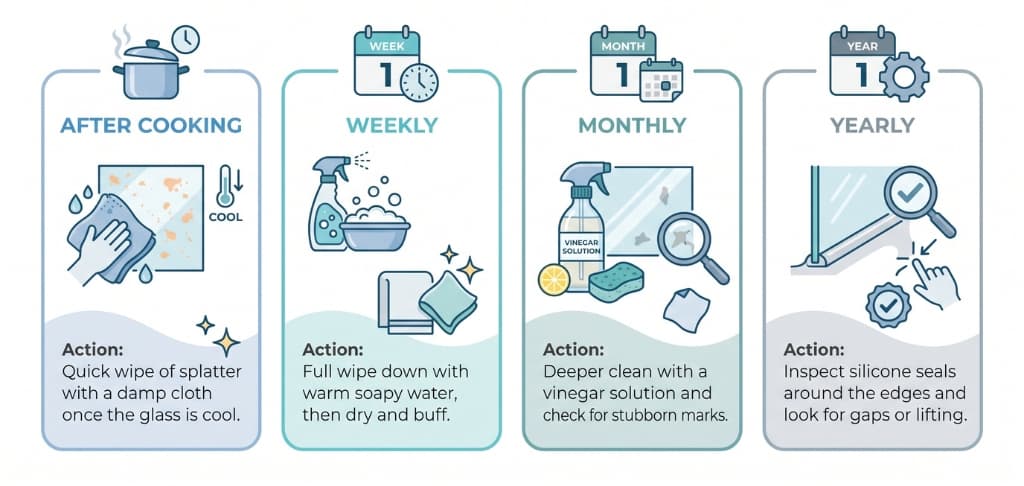
A quick wipe after cooking, a proper clean each week and a deeper clean once a month keep a glass splashback looking new with very little effort.
| How often | What to do |
|---|---|
| After cooking | Quick wipe of splatter with a damp cloth once the glass is cool |
| Weekly | Full wipe down with warm soapy water, then dry and buff |
| Monthly | Deeper clean with vinegar solution; check for any stubborn marks |
| Yearly | Check silicone seals around the edges; look for gaps or lifting |
The yearly seal check matters more than most people think. The silicone bead around the panel keeps water out from behind the glass. If you spot a gap or the seal lifting, have it resealed promptly; it is a quick, inexpensive fix that protects the wall behind.
How do you keep a glass splashback looking new for years?
Long-term care comes down to three habits: wipe splatter early, keep abrasives away from the glass, and check the seals once a year. Do that and a quality splashback will look new for decades.
Toughened glass does not fade, and because the colour sits on the back of the panel it cannot be scrubbed off from the front. A glass polish once or twice a year adds an extra layer of shine and makes future wipe-downs even quicker. In bathrooms and laundries, hard water can leave faint limescale spots over time; the same diluted vinegar spray removes them before they build up. If your splashback is looking tired after many years, or was scratched by past scouring, it may be quicker to replace the panel than restore it. You can browse recent installs in our gallery or book a free consultation, and we will measure and quote a new panel for your space.
Frequently asked questions
Warm water with a few drops of dishwashing liquid and a soft microfibre cloth. Dry the glass afterwards with a clean cloth for a streak-free finish. You rarely need anything stronger.
Yes. Mix one part white vinegar with four parts water, spray lightly, wipe and buff dry. It cuts through grease film and leaves no residue. Keep it off the silicone seals at the edges.
Yes, for quick cleans. Choose a low-ammonia product, spray onto the cloth rather than the glass, and always dry the panel afterwards. Heavy ammonia use over time can dull edges and seals.
Soften the mark first with a warm soapy cloth left on for five minutes, then rub gently with a paste of bicarbonate of soda and water. Rinse well and buff dry. Never use steel wool or metal scrapers.
No. Toughened glass is hard-wearing and handles daily cleaning well. Almost all scratches come from scourers, abrasive powders or metal tools, so keep those away and the surface stays glossy.
On the middle of the glass, briefly, yes. But keep steam away from the edges, because concentrated heat and moisture can degrade the silicone seal. Soapy water does the same job with no risk.
Decades. The colour is sealed on the back of toughened glass, so it does not fade or wash off. With basic care and sound seals, a quality splashback usually outlasts the kitchen around it.
Yes, much easier. Glass is one non-porous panel with no grout lines, so grease wipes straight off. Tiled splashbacks need grout scrubbing and periodic resealing, and grout can stain and grow mould.
