
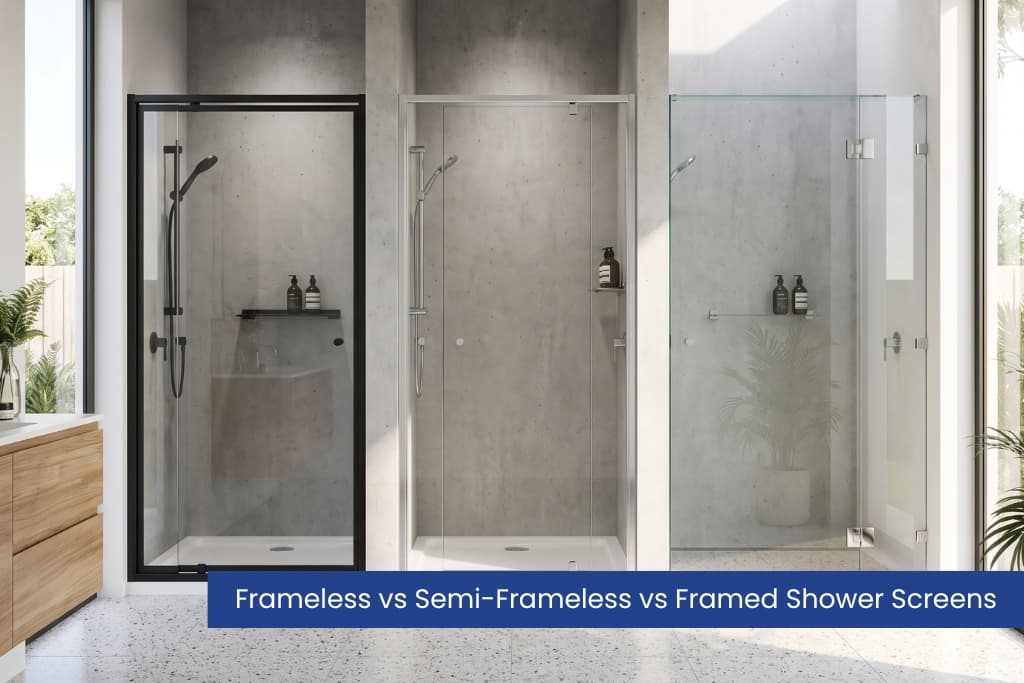
Which shower screen type is right for you?
The right shower screen depends on your budget, your bathroom and the look you want. Framed shower screens cost the least and seal well on uneven walls. Semi-frameless shower screens balance price and a cleaner, more open look. Frameless shower screens give the most seamless, modern finish and are the easiest to clean, but they cost the most and need level walls. All three use toughened safety glass and meet Australian standards, so every option is safe.
Key takeaways
• Framed screens are the cheapest and most forgiving of uneven walls, but the aluminium frame traps soap scum and can look dated.
• Semi-frameless screens keep a slim frame on the outer edges only, giving a lighter look at a mid-range price.
• Frameless screens use thick 10mm toughened glass with no frame for a seamless, easy-clean finish at a premium cost.
• All three must use Grade A safety glass under AS 1288 and AS/NZS 2208, so every option is safe when installed correctly.
• Small bathrooms often feel bigger with a frameless or semi-frameless screen because the view stays open.
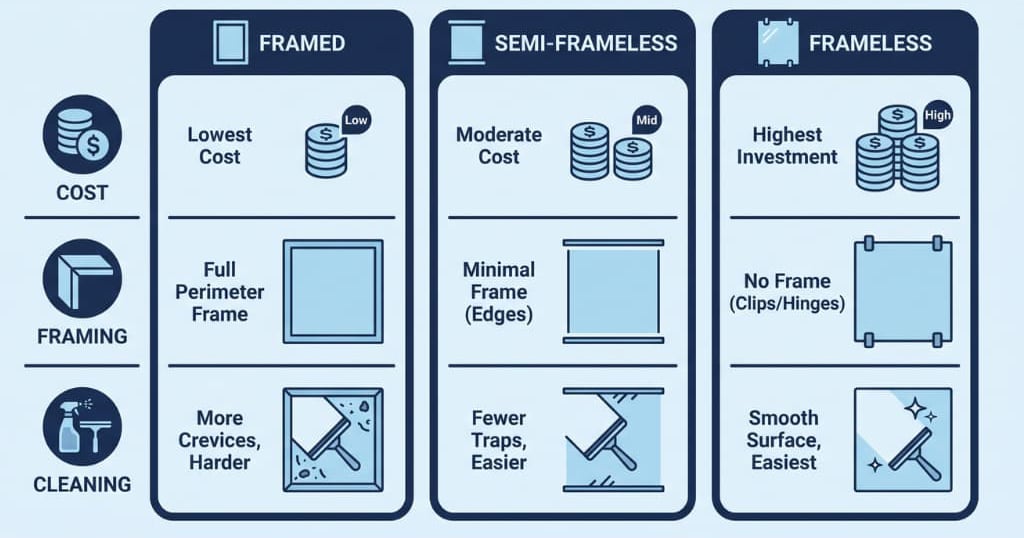
What is the difference between framed, semi-frameless and frameless screens?
The main difference is how much metal framing surrounds the glass. That one choice affects the price, the look, how you clean it, and how well the screen copes with walls that are not perfectly straight. Here is what each type means in one line, then in detail.
Framed shower screens
A framed shower screen has an aluminium frame around every edge of the glass and the door. It holds thinner glass, usually 4mm to 6mm toughened glass, and the channels help seal water inside the shower. Framed screens cost the least and cope best with uneven walls or floors. Design Inferno makes framed and fixed panel shower screens for exactly this reason. The trade-off is upkeep: the aluminium frame traps soap scum, mould and grime, so the tracks need regular cleaning, and the visible frame looks more traditional.
Semi-frameless shower screens
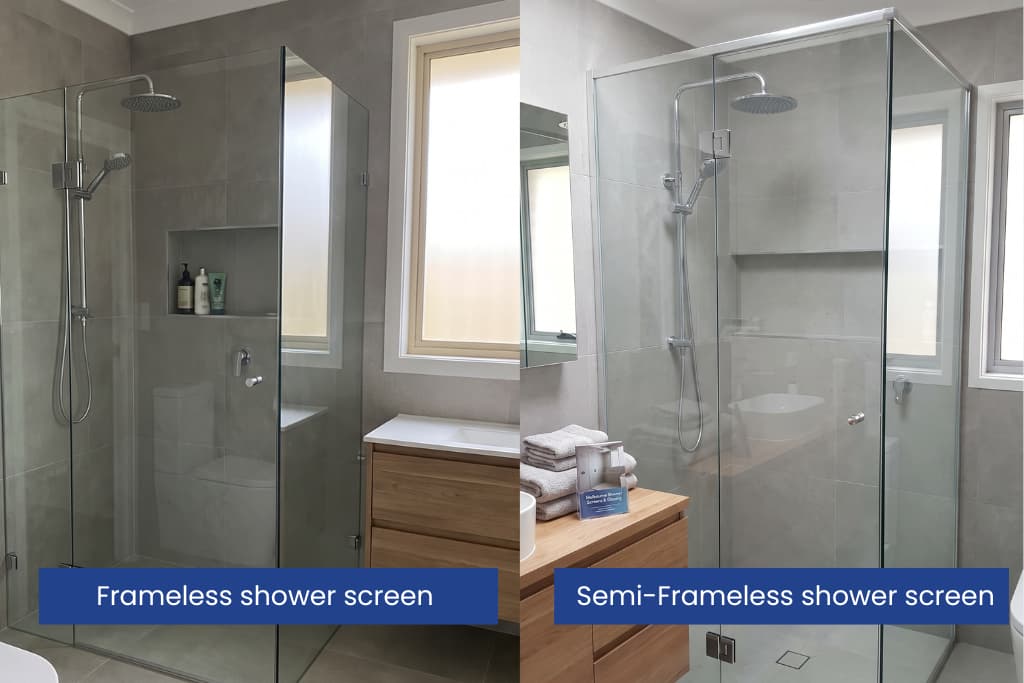
A semi-frameless shower screen has a slim frame on the outer edges only, while the door itself is frameless. It typically uses 6mm toughened glass. Semi-frameless screens balance a lighter, more open look with a mid-range price, getting you closer to the frameless look without the top-tier cost. They still seal well and handle slightly uneven walls, which makes them a popular middle path for family bathrooms.
Frameless shower screens
A frameless shower screen has no surrounding frame at all; the glass is held by discreet wall brackets and hinges. It uses thicker 10mm (sometimes 12mm) toughened glass so the panel stays rigid on its own. Frameless screens give the most seamless, modern look and make a bathroom feel more open. With no frame and no bottom track, frameless screens are the easiest type to keep clean. The trade-offs: frameless screens cost the most and need level walls and precise measuring.
Tip: If your walls or floor are noticeably out of square, tell your installer early. Frameless screens need level surfaces, while framed and semi-frameless designs hide small gaps behind their channels.
How do the three shower screen types compare?
This table sums up the practical differences at a glance. Prices are indicative only and vary with size, glass, hardware and your bathroom; always get a measured quote.
| Feature | Framed | Semi-frameless | Frameless |
|---|---|---|---|
| Glass thickness | 4–6mm toughened | 6mm toughened | 10–12mm toughened |
| Framing | All edges framed | Outer edges only | No frame; brackets/hinges |
| Look | Traditional, visible frame | Light, mostly open | Seamless, modern |
| Indicative installed cost | From ~$300–$800 | ~$650–$1,300 | ~$900–$1,800+ |
| Cleaning | More effort (tracks) | Moderate | Easiest (few edges) |
| Uneven walls | Very tolerant | Tolerant | Needs level walls |
| Custom sizing | Limited/standard | Good | Fully custom, any height |
| Best for | Tight budgets, rentals | Balanced family bathrooms | Modern, high-end bathrooms |
Which option gives the best value for money?
Framed shower screens cost the least up front, often 50–75% less than frameless. Semi-frameless sits in the middle, and frameless screens cost the most because they use thicker glass and precise hardware. But value is more than the sticker price: frameless screens last, add resale appeal and take less time to clean, so many owners feel they earn their keep over the years.
If you are renovating on a tight budget or fitting out a rental, a framed screen does the job for the lowest cost. If you plan to stay in the home and want a premium finish, a frameless screen is often worth the extra spend. Semi-frameless is the safe middle pick when you want a modern look without the top-tier price.
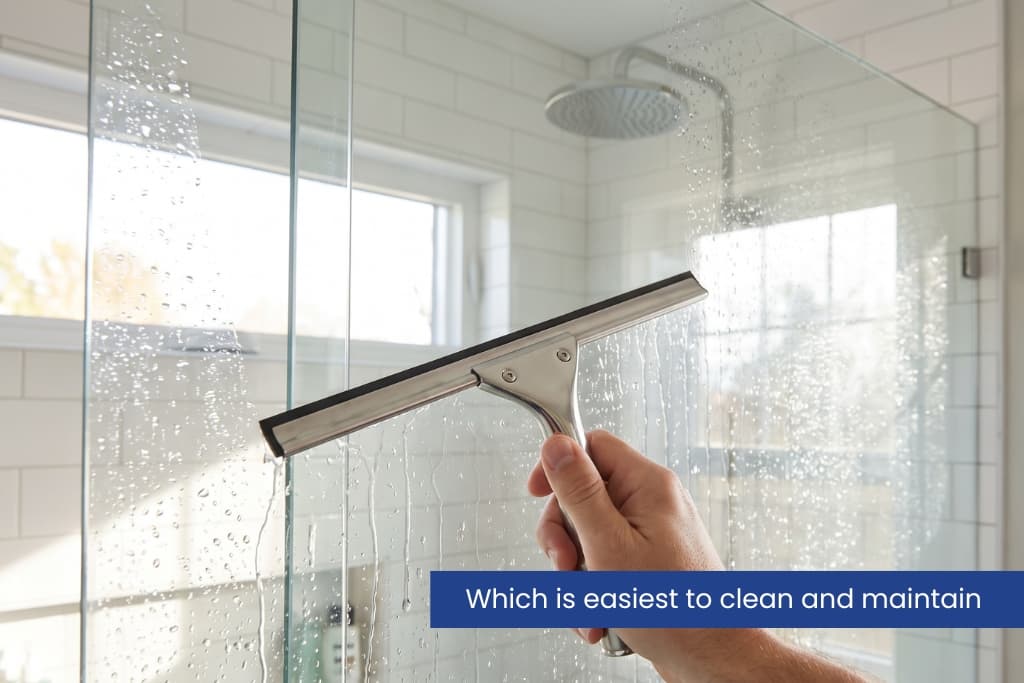
Which is easiest to clean and maintain?
Frameless shower screens are the easiest to keep clean. With no frame and no bottom track, there are far fewer spots for soap scum, mould and mineral build-up to hide. A quick squeegee after each shower keeps the glass clear.
Semi-frameless screens sit in the middle;e you only need to watch the slim outer channels. Framed screens take the most cleaning, because the aluminium tracks trap water, grime and mould and need regular scrubbing. If low maintenance matters most to you, lean towards frameless or semi-frameless.
Tip: Ask about a protective glass coating. A factory-applied treatment makes water bead and run off, so every screen type stays cleaner for longer.
Which shower screen suits a small bathroom best?
Frameless and semi-frameless screens suit small bathrooms best, because an uninterrupted glass view makes the room feel larger. A clear 10mm frameless panel almost disappears, which is why it is a favourite for compact ensuites.
Framed screens still work in small spaces and cost less, but the visible frame and any obscure glass can make a small room feel more closed in. If space feels tight, clear glass with minimal framing is usually the better choice.
Do all shower screens meet Australian safety standards?
Yes. Every shower screen in Australia framed, semi-frameless or frameless must use Grade A safety glass under AS 1288 (Glass in buildings) and AS/NZS 2208 (safety glazing materials). That means toughened or laminated glass that breaks into small, blunt pieces rather than sharp shards.
The standards also set minimum glass thickness: framed toughened glass must be at least 4mm, while partly framed and frameless glass must be at least 6mm. In practice, frameless screens use 10mm or 12mm toughened glass so the unsupported panel stays rigid and stable. Toughened safety glass should carry a permanent stamp showing it meets AS/NZS 2208. You can read more about toughened glass safety standards via the NSW Government. Always use a licensed glazier so your screen is compliant and safe.
Tip: Look for the AS/NZS 2208 mark etched in a corner of the glass. If you cannot find it, ask your supplier for proof the glass is certified safety glass.
So which shower screen should you choose?
Start with your top priority. If it is price, choose framed. If it is a modern, easy-clean finish and budget allows, choose frameless. If you want a balance of both, choose semi-frameless. Then factor in your walls: level surfaces suit frameless, while framed and semi-frameless forgive small imperfections.
At Design Inferno, we make custom shower screens in all three styles and can measure your bathroom, recommend the right glass and hardware, and give you a clear quote. You can see finished screens in our project gallery, or contact our team to talk through what will look and work best in your space.
Still deciding between the two most popular styles? Our guide comparing frameless and semi-frameless shower screens goes deeper on that head-to-head.
Frequently asked questions
For many owners, yes, frameless screens give the most open, modern look, are the easiest to clean and can add resale appeal. If you plan to stay in your home and want a premium finish, the extra spend is usually worth it. On a tight budget, a framed or semi-frameless screen still looks good and performs well.
They can let a little more water escape, because there is no bottom frame or track to channel it. A good installer manages this with the right floor fall, a small gap under the door and quality seals. Framed and semi-frameless screens seal more tightly, which suits bathrooms where water control is a big concern.
The industry standard is 10mm toughened glass, with 12mm used for larger panels. This keeps the unsupported glass rigid and stable. The Australian minimum for frameless glass is 6mm, but 6mm can flex, so most quality frameless screens use 10mm.
Frameless screens are easiest, because there is no frame or track to trap soap scum and mould. Semi-frameless needs a little attention around the outer channels, and framed screens take the most cleaning because grime collects in the aluminium tracks.
Yes, semi-frameless screens give a light, mostly open look at a lower price than fully frameless. They still seal well and cope with slightly uneven walls, so they are a popular choice for family bathrooms that want a modern feel without the top-tier cost.
When installed correctly, yes,s AS 1288 and AS/NZS 2208 require Grade A safety glass (toughened or laminated) for all shower screens. This glass breaks into small, blunt pieces rather than sharp shards. Always use a licensed glazier.
