
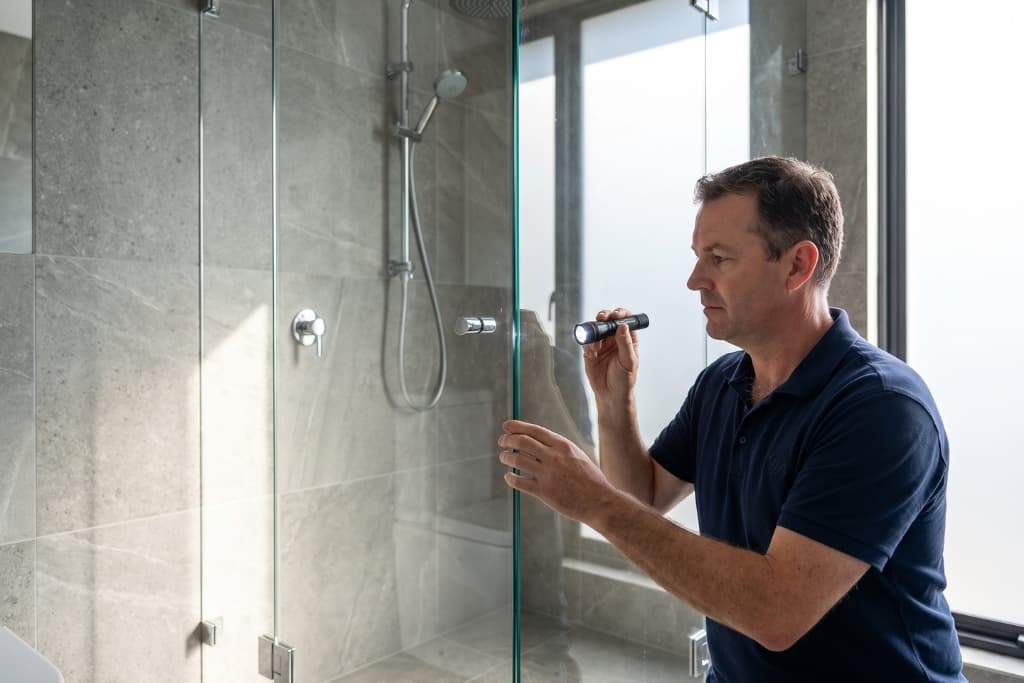
Fix your shower screen when the glass is sound and only the hardware or seals have failed, such as worn rollers, loose hinges, a leaking seal or a tired silicone bead. Replace it when the toughened glass is chipped, cracked or has shattered, when the frame is badly corroded, or when a leak keeps coming back. Toughened glass cannot be re-cut, so damaged panels must be replaced, not patched.
Key takeaways
- Small faults like worn rollers, loose hinges, failed seals and old silicone are usually a straightforward repair.
- Chipped, cracked or shattered toughened glass cannot be fixed and needs a new panel.
- A shower screen leak often traces back to a seal or silicone bead, not the glass itself.
- Toughened safety glass is made to Australian Standard AS 1288, so a like-for-like replacement keeps your bathroom compliant.
- A quick professional inspection is the fastest way to know whether a repair or a replacement is the smarter spend.
What can actually be repaired on a shower screen?
Most shower screen problems are hardware or seal problems, and those are usually a simple, low cost repair. If the glass is in good condition, there is rarely any need to replace the whole screen. A good glazier can restore a screen to like new for a fraction of the cost of a full replacement.
The parts that commonly wear out sit around the glass, not in it. Fixing them early also stops small leaks from damaging your wall sheeting and floor.
Seals, sweeps and silicone
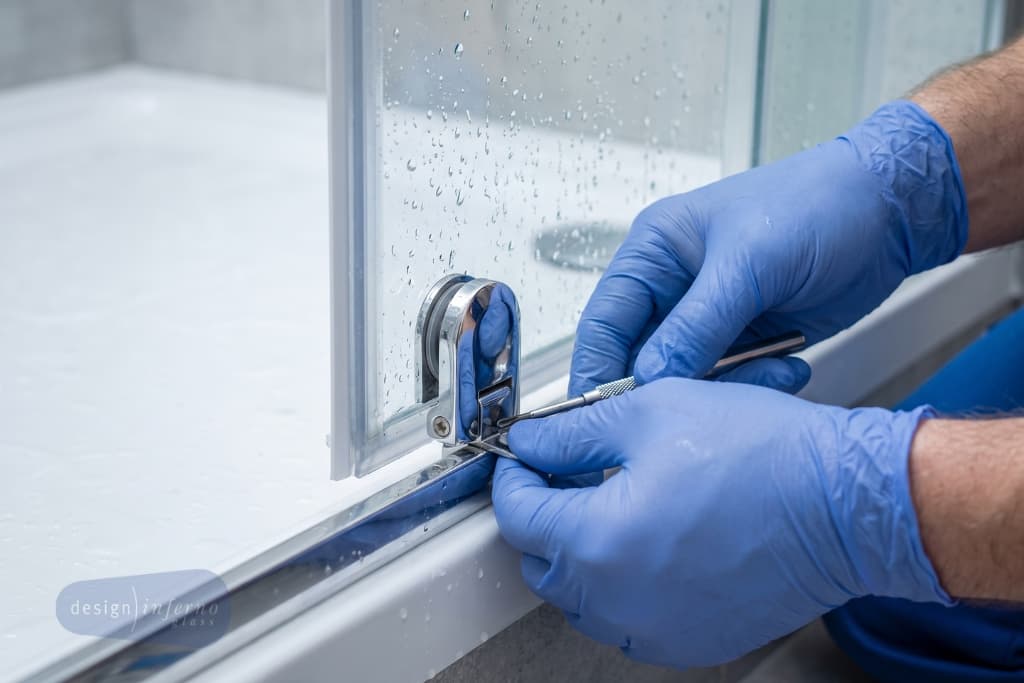
Rubber seals and door sweeps stop water escaping the shower. They harden and split over time, which is the most common cause of a leaking screen. Replacing a seal or re-running the silicone bead along the wall and base is a fast, tidy repair that solves most leaks.
Rollers, wheels and sliding tracks
On a sliding screen, the door rides on small rollers inside a track. When the door sticks, jumps or drags, worn rollers are usually the cause. New rollers and a clean, straight track get the door gliding again without touching the glass.
Hinges, pivots and handles
A frameless or semi-frameless door swings on hinges or pivots. If the door drops, will not stay shut or feels loose, the hinges often just need adjusting or replacing. Loose handles, knobs and towel rails are an easy fix too.
Frames and channels
On framed and semi-framed screens, the aluminium channel holds the glass and guides the water away. Light surface marks can be cleaned up, and minor channel damage can sometimes be repaired. Heavy corrosion is a different story, which we cover below.
Tip: Before you call anyone, note exactly what is wrong, whether the screen leaks, sticks, drops or is damaged, and take a couple of photos. It helps your glazier quote the right repair the first time.
When is it better to replace the whole shower screen?
Replace the screen when the glass is damaged, when the frame has corroded through, or when repeated repairs no longer make sense. Damaged toughened glass is the clearest case, because it cannot be repaired and is a genuine safety risk. A new made-to-measure screen is often the better value once you add up several patch-up jobs.
Here are the situations where replacement is the right call rather than another repair.
Chipped, cracked or shattered glass
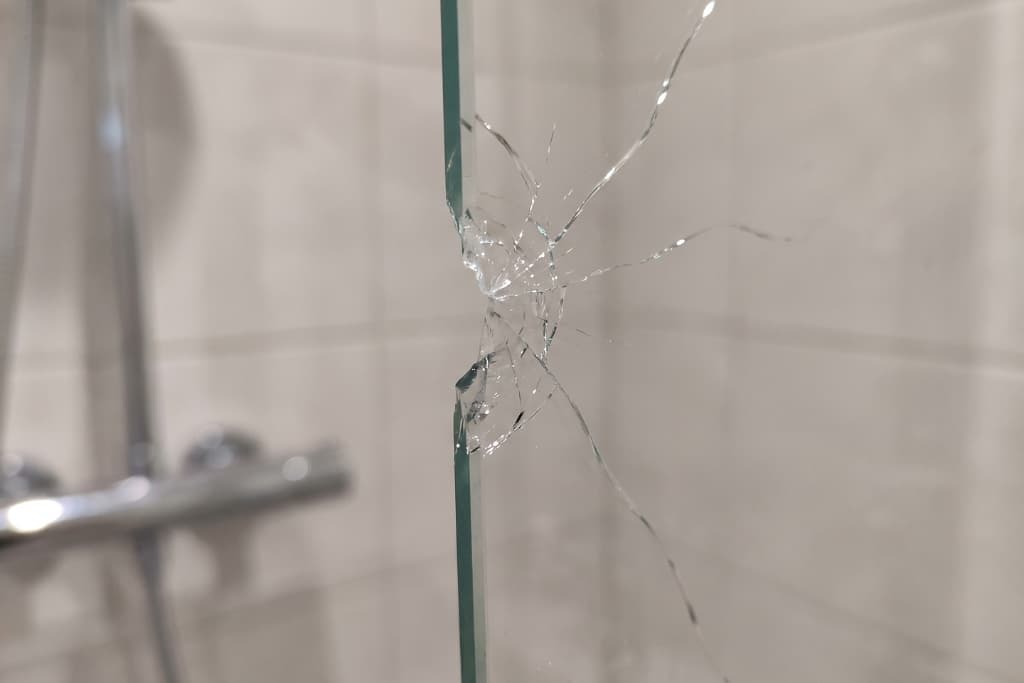
A chip or crack in toughened glass cannot be repaired, and it weakens the whole panel. Toughened glass is designed to break into small, blunt pieces if it fails, so a damaged panel can let go without warning. If the glass is compromised in any way, replace it.
The glass has shattered on its own
A small number of toughened glass panels break with no impact at all. This is usually caused by tiny nickel sulphide inclusions left in the glass during manufacture, which can expand years later and trigger a spontaneous break. It is rare, but when it happens the only option is a new panel.
Heavy frame corrosion
Constant moisture eventually attacks aluminium and steel fittings. Surface marks clean up, but once a frame or channel is badly corroded or pitted it no longer supports the glass or seals properly, and a full replacement is the safe fix.
The same leak keeps coming back
One reseal should solve a leak. If water keeps finding its way out after repeated repairs, the screen may be out of square, the wall may have moved, or the design may not suit the space. At that point, a new screen fitted to the actual opening is money better spent.
You are renovating anyway
If you are updating the bathroom, a new frameless shower screen or semi-frameless screen can lift the whole room. Matching the screen to new tiles and tapware is far easier than trying to blend a repair into a fresh fit-out. Our gallery shows how different styles change a bathroom.
Repair or replace: a quick comparison
Use this table as a rough guide. When glass is involved, always have it checked in person.
| Problem | Usual action | Why |
|---|---|---|
| Leaking at the base or wall | Repair | New seal or fresh silicone bead |
| Sliding door sticks or jumps | Repair | Replace worn rollers, clean the track |
| Door drops or will not latch | Repair | Adjust or replace hinges and pivots |
| Loose handle or towel rail | Repair | Refit or replace the fitting |
| Chipped or cracked glass | Replace | Toughened glass cannot be re-cut or patched |
| Shattered panel | Replace | Safety issue, new panel only |
| Frame badly corroded | Replace | It no longer supports glass or seals |
| Repeated leaks after resealing | Replace | Screen is likely out of square |
| Outdated look during a reno | Replace | Match new tiles, tapware and layout |
Why can’t chipped or cracked toughened glass be repaired?
Because toughened glass cannot be cut, drilled or ground once it has been made, any chip or crack means the panel has to be replaced. Your shower screen is toughened safety glass made to Australian Standard AS 1288, and safety glazing to AS/NZS 2208. Toughening puts the surface under tension, so cutting or grinding a finished panel would simply shatter it.
That same design is what keeps you safe. If a toughened panel does break, it crumbles into small blunt pieces rather than long sharp shards. A repaired or filled chip would not restore the panel’s strength, so a like-for-like replacement in the correct glass is the only compliant fix. A qualified glazier measures the opening and supplies a new panel that meets the same standard.
What causes shower screens to wear out?
Everyday moisture, hard water and constant use are the main reasons shower screens fail. None of it means the screen was faulty. It simply reaches the end of its service life, usually in the seals, hardware or frame long before the glass.
Knowing the cause helps you decide whether a repair will last or whether replacement is smarter.
- Hard water and soap build a mineral film that stiffens seals and stains glass.
- Rubber seals and silicone dry out, shrink and split over the years.
- Doors used many times a day wear rollers, hinges and latches.
- Trapped moisture corrodes aluminium and steel fittings.
- Slight movement in the wall or base can crack silicone and open gaps.
- In rare cases, a nickel sulphide inclusion causes a toughened panel to break on its own.
How much do repairs cost compared with replacement?
A repair is almost always cheaper than a new screen, which is why it makes sense to fix minor hardware and seal faults while the glass is sound. Reseals, new rollers and hinge adjustments are small jobs. A full replacement costs more because it includes new made-to-measure glass, fittings and installation, but it resets the clock on the whole screen.
The right choice depends on the glass. If the panel is damaged, replacement is not really optional. If the glass is fine and only the hardware has aged, a repair is the better value. The most accurate way to compare is a free measure and quote, so you are weighing real figures rather than guesses. You can contact our team to arrange one.
How do I decide between a repair and a replacement?
Work through it in order, starting with the glass, because that decides everything else. If the glass is damaged, you are replacing, and if it is sound, you are almost certainly repairing.
- Check the glass first. Any chip, crack or break means replace the panel.
- Check the frame. Light marks clean up, but heavy corrosion means replace.
- Identify the fault. A leak, a sticking door or a loose fitting is usually a repair.
- Count the repairs. If you keep fixing the same screen, replacement may cost less overall.
- Get it checked. A quick professional inspection confirms the safest, best value option.
If you are still unsure, a glazier can look at the screen and tell you plainly whether a repair will hold or whether a new made to measure shower screen is the wiser spend. Design Inferno supplies and installs across Melbourne, and every screen is made in toughened safety glass and backed by a workmanship warranty.
Frequently asked questions
No. A crack in toughened glass cannot be repaired, and it weakens the entire panel. The glass needs to be replaced with a new panel made to the same Australian Standard. Do not keep using a cracked screen, as toughened glass can break suddenly once it is compromised.
Repairs are usually cheaper when the glass is sound, and only the seals or hardware have worn out. Replacement costs more but is unavoidable if the glass is damaged or the frame has corroded. A free measure and quote is the best way to compare the two for your screen.
Most shower screen leaks come from a failed rubber seal, a worn door sweep or an old silicone bead, not the glass. These are simple, low-cost repairs. If a leak returns after resealing, the screen may be out of square and worth replacing.
Often yes. If the frame, channel or hinges are still sound, a glazier can supply and fit a new toughened glass panel on its own. If the fittings are also worn or corroded, replacing the whole screen is usually the better value.
A quality glass shower screen can last well over a decade. The glass itself lasts the longest, while seals, rollers and hinges are the parts most likely to need attention or a small repair along the way.
Toughened glass can very rarely break without impact, usually because of a tiny nickel sulphide inclusion left in the glass during manufacture. It is uncommon, but when it happens, the panel must be replaced with new toughened safety glass.
Yes. A qualified glazier measures the opening, supplies the correct toughened safety glass and installs it so it is watertight and compliant. Correct fitting keeps the screen safe and stops leaks that can damage your bathroom.
