
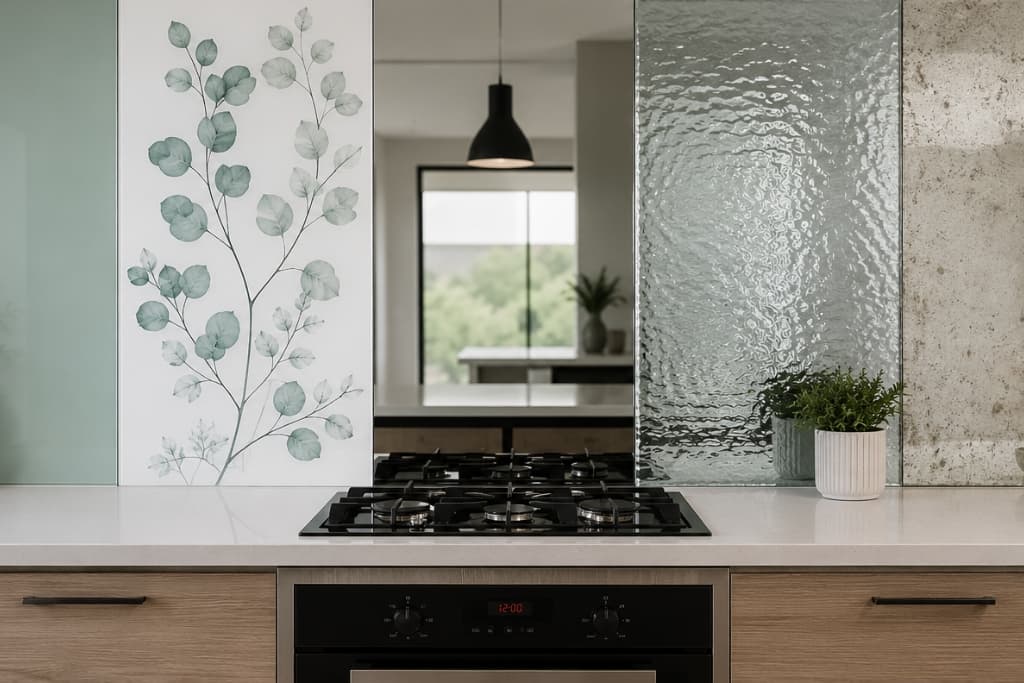
Glass splashback finishes fall into five main types: painted (back-painted in any colour), printed (a digital image or pattern fired onto the glass), mirror (reflective, to open up a room), textured or slumped (subtle raised patterns), and hand-silvered (an aged, antique look). Each finish uses toughened safety glass and gives you a seamless, easy-clean surface with no grout lines.
Key takeaways
- Painted glass suits modern kitchens and matches any colour, including your cabinetry or benchtop.
- Printed glass lets you add a custom photo, pattern or texture-look for a feature wall.
- Mirror and hand-silvered finishes bounce light and make small or dark rooms feel larger.
- Textured (slumped) glass hides fingerprints and adds depth without loud colour.
- All finishes behind a cooktop should use toughened glass to AS 1288 for heat and safety.
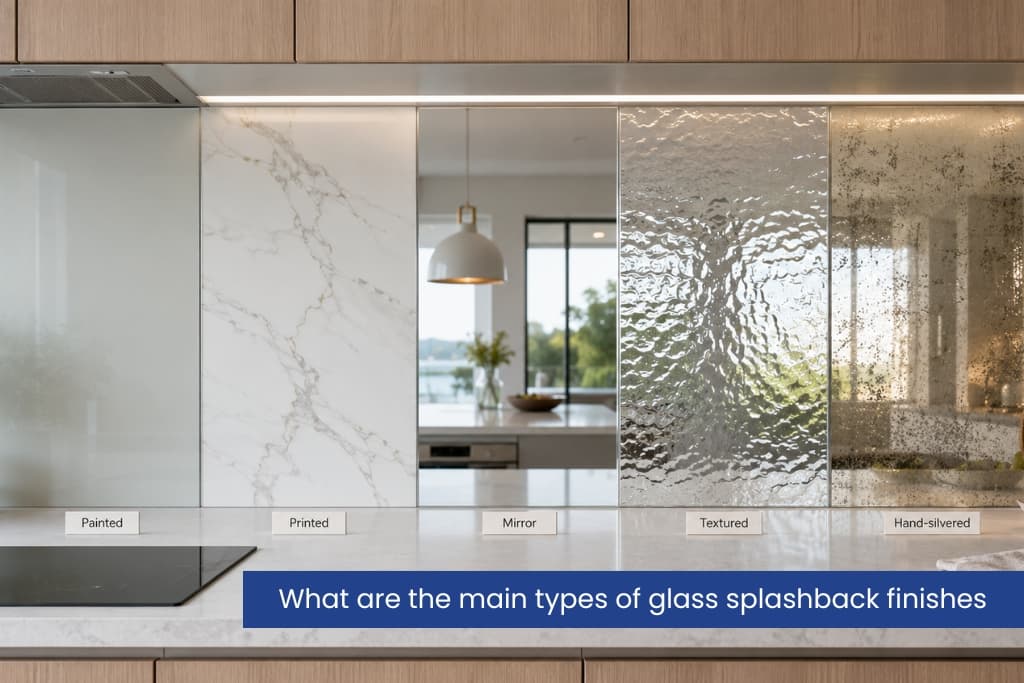
What are the main types of glass splashback finishes?
There are five popular glass splashback finishes in Australian kitchens and bathrooms: painted, printed, mirror, textured (slumped) and hand-silvered. The finish changes the look and mood of the glass, but the base is the same toughened safety glass. Your choice comes down to colour, light, texture and where the splashback will sit.
A glass splashback protects the wall behind your cooktop, sink or vanity from heat, water and splatter. Unlike tiles, it has no grout lines, so it wipes clean in seconds. The finish is what gives each panel its personality.
At Design Inferno, we have fabricated and installed custom splashbacks across Melbourne for more than 15 years. In that time, the finish is the decision clients agonise over most. Every panel is cut to size and made from toughened glass, so the choice really is about colour, reflectivity and texture. You can compare styles in our splashback gallery or test shades with our colour simulator.
What is a painted glass splashback?
A painted glass splashback is clear or low-iron glass that is back-painted, meaning the colour is applied to the rear of the panel and sealed. You see the colour through the glass, which gives a deep, glossy, seamless look. It is the most popular finish because it can match almost any colour you like.
Painted glass is the classic choice for modern kitchens. The colour sits behind the glass, so it stays glossy and never needs repainting. Because it is one solid panel, there is nothing for grease or grime to catch on.
Best for and colour matching
Painted finishes suit minimalist and contemporary kitchens. You can match a paint code (such as a Dulux colour), your cabinetry, or your benchtop for a coordinated look. Popular picks include crisp whites, soft greys, deep blacks and bold feature colours.
Tip: choose low-iron glass for true colourStandard glass has a slight green tint on the edge. For pale colours like white or pastel, ask for low-iron (extra-clear) glass so the colour looks true and bright.
Not sure which shade works? Try our colour simulator or book a free consultation.
How do printed glass splashbacks work?
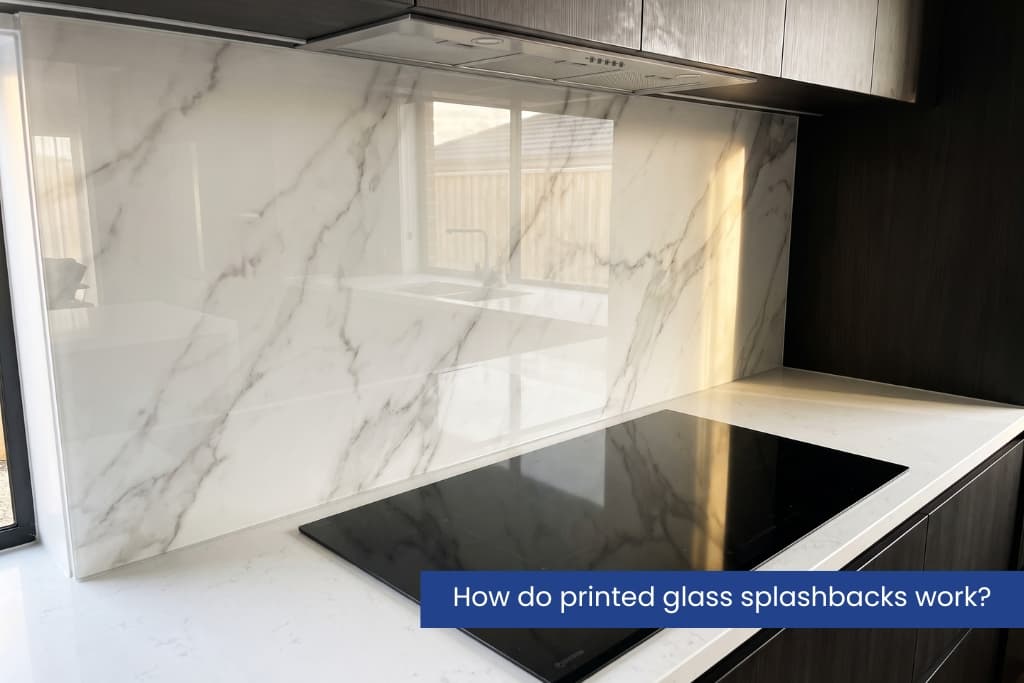
Printed glass splashbacks use a digital printing process to fire an image, pattern or texture onto the glass. This lets you add a custom photo, a marble or stone look, or a repeating pattern. Once printed and toughened, the design is sealed and hard-wearing, so it will not fade or peel with everyday cleaning.
A printed finish turns your splashback into a feature. Popular choices include stone and marble looks, botanical prints, geometric patterns, or a custom photo. Because the print sits behind toughened glass, it is protected from heat and moisture.
Printed panels are a great way to add personality without loud paint. They work well in open-plan kitchens where the splashback is on show from the living area.
Why choose a mirror splashback?
A mirror splashback is reflective glass that bounces light around the room. It makes small or dark kitchens feel larger and brighter. You can choose a clear mirror, or a tinted mirror in bronze or grey for a softer, warmer reflection that hides marks a little better.
Mirror finishes are ideal for compact kitchens, galley layouts and rooms with little natural light. The reflection adds a sense of depth and space. For a subtler effect, tinted mirror (bronze or grey) reduces glare and blends with warm timber or dark cabinetry. Explore more mirror options on our wall mirrors page.
Good to knowA clear mirror behind a busy cooktop shows cooking splatter more than a coloured finish. Behind a sink or on a feature wall, a mirror splashback shines.
What is a textured (slumped) glass splashback?
A textured or slumped glass splashback has a subtle raised pattern shaped into the glass with heat. The result is a tactile, three-dimensional surface that catches light softly. Textured finishes hide fingerprints and smudges well, so they stay looking clean between wipes.
Slumped glass is made by heating flat glass until it gently forms over a mould, creating ripples, waves or linear patterns. It adds depth and interest without bold colour. See examples of our slumped and textured glass work.
Textured finishes suit feature walls, bars and bathrooms where you want quiet detail. The raised surface diffuses light, so reflections are soft rather than sharp.
What is a hand-silvered glass splashback?
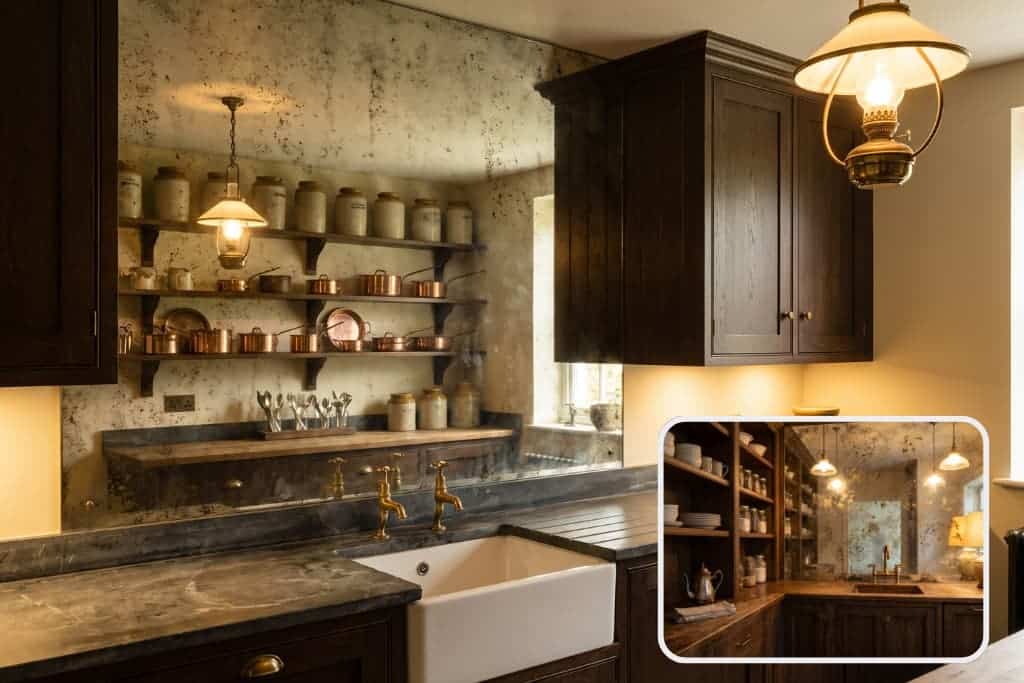
A hand-silvered glass splashback has an aged, antique-mirror look created by hand-applying and distressing the silver backing. It gives a warm, mottled, vintage finish rather than a perfect mirror. This suits heritage homes, feature walls and bars where you want character and a sense of age.
Hand-silvered (antique mirror) glass is prized for its one-of-a-kind patina. No two panels are identical. The distressed silvering scatters light in a soft, golden way, which flatters period kitchens and character interiors.
Because the effect is deliberately imperfect, it hides everyday marks better than a clear mirror. It is a strong choice for a feature wall or a butler’s pantry.
Which glass splashback finish suits your kitchen?
Use this quick comparison to match a finish to your space, style and how much cleaning you want to do.
| Finish | Best for | Look & feel | Cleaning | Reflectivity |
|---|---|---|---|---|
| Painted | Modern kitchens, colour matching | Glossy, solid colour | Very easy | Low–medium |
| Printed | Feature walls, custom patterns | Image, stone or marble look | Very easy | Low |
| Mirror | Small or dark rooms | Bright, spacious | Shows splatter | High |
| Textured / slumped | Quiet detail, bars, bathrooms | 3D, tactile ripples | Hides marks well | Low–medium |
| Hand-silvered | Heritage, feature walls | Aged, antique, mottled | Hides marks well | Medium |
Glass vs tile, acrylic and stone splashbacks
Compared with tiles, a glass splashback has no grout lines, so it is faster to clean and more hygienic. Compared with acrylic, glass is more heat-resistant and will not scratch or yellow over time. Compared with stone, glass is lighter, seamless and easier to colour-match. Glass costs more than basic tiles or acrylic, but it lasts and stays looking new.
Material | Cleaning | Heat behind cooktop | Look | Relative cost |
|---|---|---|---|---|
| Glass | No grout, wipes clean | Toughened, heat-resistant | Seamless, glossy | Mid–high |
| Tile | Grout traps grease | Heat-safe | Grid pattern, grout lines | Low–mid |
| Acrylic | Wipes clean | Not for behind gas | Glossy but can scratch/yellow | Low |
| Stone | Sealing needed | Heat-safe | Natural, textured | High |
Which finish is best behind a cooktop?
Any glass splashback finish can sit behind a cooktop as long as it is made from toughened safety glass to AS 1288. Painted and printed finishes are the most popular here because they hide splatter and wipe clean easily. Keep the recommended clearance between the cooktop and combustible surfaces, and have the panel professionally installed.
Behind a gas or electric cooktop, glass must be toughened so it resists heat and, if it ever breaks, crumbles into small blunt pieces rather than sharp shards. This is covered by AS 1288 (glass in buildings) and AS/NZS 2208 (safety glazing). Toughened splashback glass is generally a minimum of 5 mm thick and permanently marked in one corner.
Safety note
Follow your cooktop maker’s clearance rules. As a guide, keep around 200 mm between a burner and any combustible surface, and confirm requirements for your specific model.Always use a professional installer for splashbacks behind heat.
How much do glass splashback finishes cost?
In Australia, glass splashbacks typically cost about $350–$1,000 per square metre supplied and installed, depending on the finish. Painted glass is the most affordable at roughly $350–$650 per m². Mirror sits around $450–$650 per m², while printed, textured and hand-silvered finishes run higher, from about $750 to $1,000+ per m². A tailored measure and quote gives the exact figure for your kitchen.
Painted glass is the entry point because it is a single process. Printed, textured (slumped) and hand-silvered finishes cost more because of the extra fabrication involved. Low-iron (extra-clear) glass adds a little for a truer colour, and custom colour matching typically adds around $50–$100 per m².
| Finish | Indicative cost (supplied & installed) |
|---|---|
| Painted glass | $350–$650 per m² |
| Mirror (toughened) | $450–$650 per m² |
| Printed glass | $750–$1,000 per m² |
| Textured / slumped | $700–$1,000+ per m² |
| Hand-silvered (antique) | From ~$800 per m² (custom) |
Indicative Australian market ranges as at July 2026; add roughly $40–$100 per cut-out for power points and taps. Prices vary by size, access and location — confirm with a quote.
Every kitchen is different, so the best way to compare is a tailored quote. Contact Design Inferno for a free measure and quote.
How do you clean a glass splashback?
Cleaning a glass splashback takes seconds. Wipe it with a soft cloth and warm soapy water or a standard glass cleaner, then buff dry with a microfibre cloth to avoid streaks. Because there are no grout lines, grease and food have nowhere to hide. Avoid abrasive scourers or gritty pastes, which can scratch the surface.
For day-to-day marks, warm water and a drop of dishwashing liquid is enough. For stubborn splatter near a cooktop, a vinegar-and-water spray or a non-abrasive glass cleaner works well. Textured and hand-silvered finishes hide smudges, so they need wiping less often than a clear mirror.
- Use a soft or microfibre cloth, not steel wool or abrasive pads.
- Buff dry to stop water spots and streaks.
- Skip harsh, gritty or ammonia-heavy cleaners on mirror and hand-silvered finishes.
How to choose and order the right splashback finish
Follow these steps to land on a finish you will love for years.
- Set the mood. Decide if you want bold colour (painted), a pattern (printed), light and space (mirror), or quiet texture (textured or hand-silvered).
- Check the location. Behind a cooktop, prioritise easy-clean painted or printed finishes in toughened glass.
- Test the colour. Match a paint code or benchtop and view samples in your own light, or use the online colour simulator.
- Choose the glass. Pick low-iron glass for true, bright colours; standard glass is fine for darker shades.
- Book a measure. Have your panels professionally measured, toughened, cut for power points, and installed.
Explore related pages: glass splashbacks, colour simulator, slumped / textured glass, wall mirrors, and our gallery. Ready to start? Book a free consultation.
Frequently asked questions
The five main finishes are painted (back-painted colour), printed (a digital image or pattern), mirror (reflective), textured or slumped (raised patterns), and hand-silvered (an aged antique look). All use toughened safety glass.
Yes. The image is printed, and then the glass is toughened, so the design is sealed behind the glass. It will not fade, peel or wash off with normal cleaning.
Yes. A mirror splashback reflects light and the room, which adds depth and makes small or dark kitchens feel larger and brighter.
Which glass splashback finish is best behind a cooktop?
No. The raised pattern is smooth and sealed, so it wipes clean like flat glass. Textured finishes actually hide fingerprints and smudges better than a mirror.
Painted and printed finishes are the most practical behind a cooktop because they hide splatter and wipe clean. Whichever finish you choose, it must be toughened glass to AS 1288.
Painted and printed finishes are the most practical behind a cooktop because they hide splatter and wipe clean. Whichever finish you choose, it must be toughened glass to AS 1288.
Yes. A painted glass splashback can be matched to a paint code, your cabinetry or your benchtop. Ask for low-iron glass so pale colours look true.
Toughened glass splashbacks are designed to handle the heat from a domestic cooktop. Follow your cooktop’s clearance guidance and use a professional installer.
As a guide, expect about $350–$1,000 per square metre supplied and installed. Painted is the most affordable ($350–$650/m²) and printed or textured finishes sit at the higher end ($750–$1,000+/m²).
A toughened glass splashback can last decades. The colour is sealed behind the glass, so it will not fade, peel or need repainting, and it does not have grout to crumble or stain.
Often yes, if the tiled wall is flat, sound and true. We measure first to check, then fix the glass panel over the top, which avoids the mess of removing old tiles.
